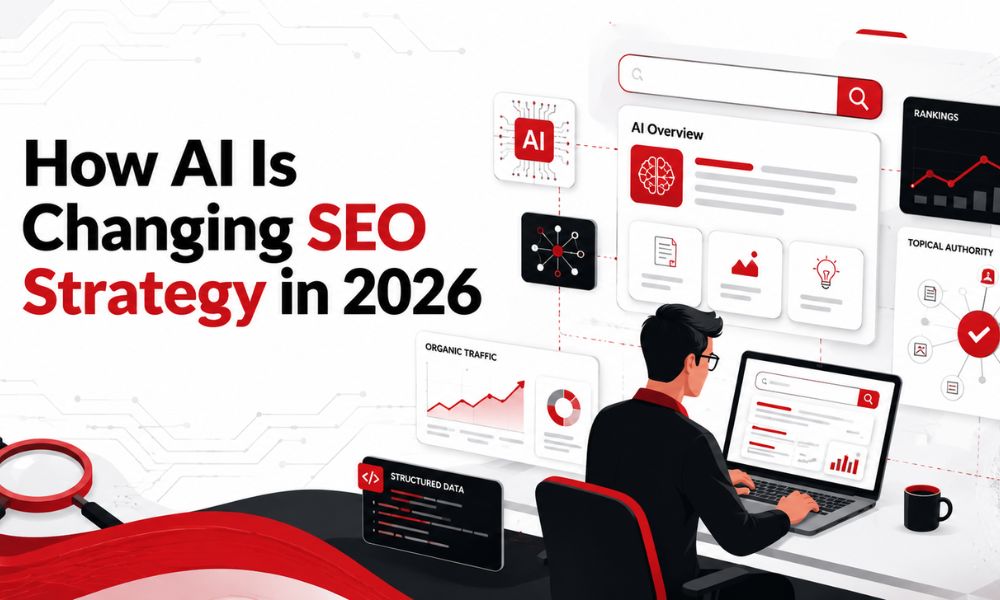
Search engine optimization in 2026 looks very different from what businesses relied on just a few years ago. AI-powered search experiences are changing how users find information, how search engines rank content, and how brands build online visibility. Traditional SEO strategies focused heavily on keywords and rankings, but modern SEO search optimization is now centered around search intent, topical authority, user experience, and AI visibility.
Google AI search experiences, ChatGPT Search, Gemini, and other AI-driven platforms are increasingly giving users direct answers instead of simply listing websites. This shift is pushing businesses to rethink how they approach search engine optimization and digital marketing.
The future of search engine optimization is no longer about publishing the most content or targeting the highest number of keywords. It is about creating the most useful, trustworthy, and contextually relevant content for both users and AI systems.
Businesses that want to improve SEO in 2026 need to focus on:
- topical authority
- structured content silos
- SEO optimized content
- semantic search optimization
- AI-readable website structure
- strong internal linking
- technical SEO
- user intent
At Red Rattler Creative, we are seeing AI and SEO evolve together rather than compete against each other. The businesses adapting fastest are building content ecosystems that help search engines and AI systems clearly understand expertise, authority, and relevance.
This shift is defining the future of SEO with AI.
How AI is Transforming Search Engine Optimization
The biggest change happening in SEO right now is simple:
Search engines are becoming answer engines.
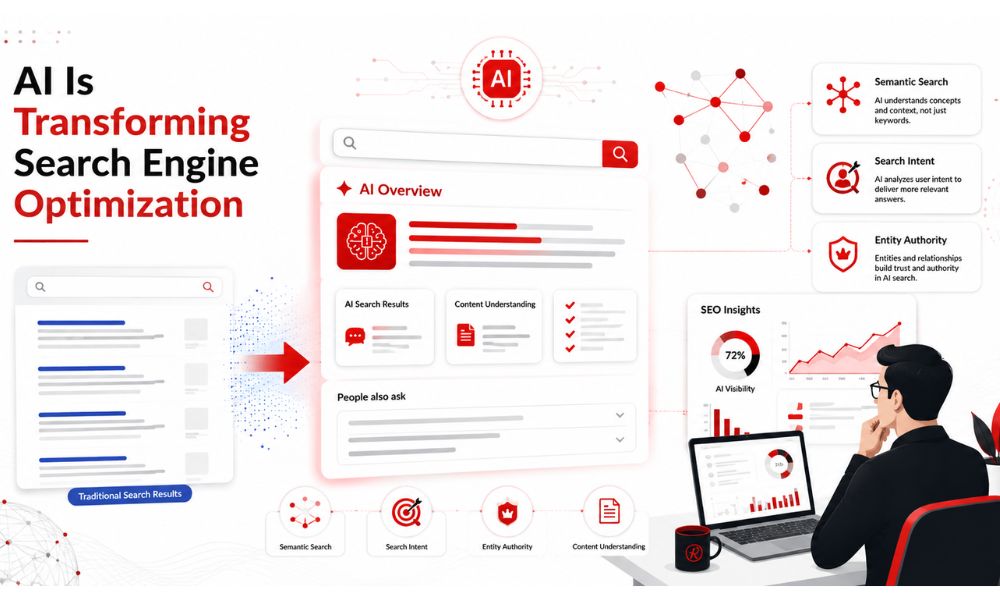
Google AI Overviews now summarize information directly in search results. Instead of clicking through multiple pages, users often receive instant answers generated from several trusted sources. AI platforms like ChatGPT and Perplexity are also becoming major search tools for users researching products, services, and business solutions.
According to Google’s documentation on AI-powered search experiences, AI-generated search results are designed to help users understand topics faster and reduce the need for repetitive searches.
This is changing how businesses approach search optimization.
Traditional SEO strategies focused heavily on:
- keyword placement
- backlinks
- rankings
- metadata optimization
Modern SEO strategy now focuses more on:
- semantic relevance
- user intent
- entity authority
- content structure
- topical depth
- trust signals
The future of SEO in marketing depends on whether your website can become a trusted source that AI systems can confidently reference and summarize.
Why AI Overviews Are Reducing Organic Clicks
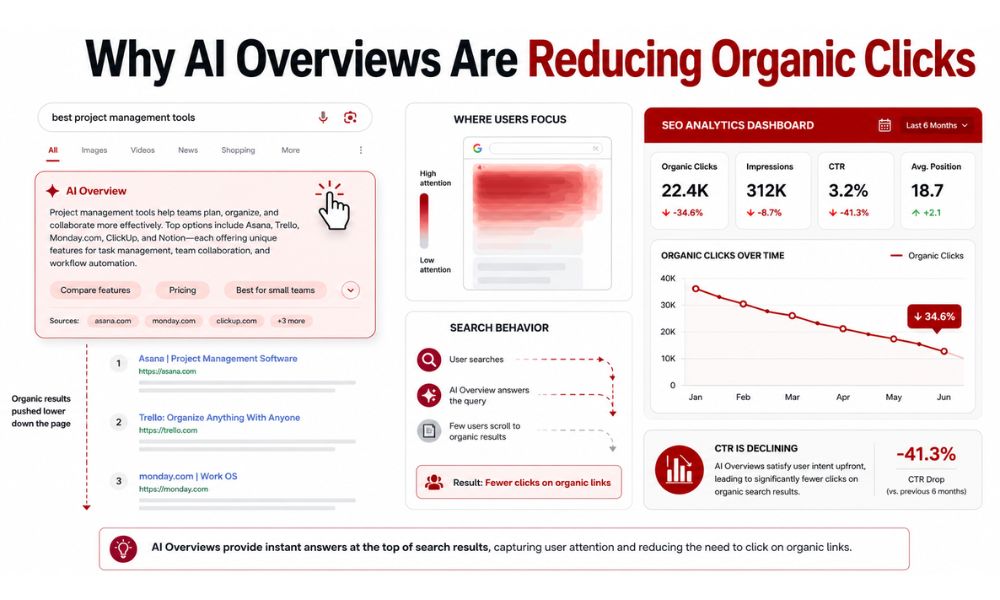
One of the biggest changes businesses are seeing in 2026 is declining organic click-through rates, even when rankings remain stable.
This is happening because AI Overviews answer many informational searches directly inside search results. Users often get the information they need without visiting a website.
That does not mean SEO is disappearing.
It means SEO success is evolving.
Visibility now matters as much as clicks. Brands appearing consistently inside AI-generated search experiences often gain:
- stronger authority
- increased trust
- higher brand recognition
- more branded searches
- better conversion quality
This is one reason why many businesses are shifting from ranking-focused SEO toward visibility-focused SEO.
The impact of zero-click search behavior is already reshaping traffic patterns across industries, especially for informational content.
Search Intent Matters More Than Keywords
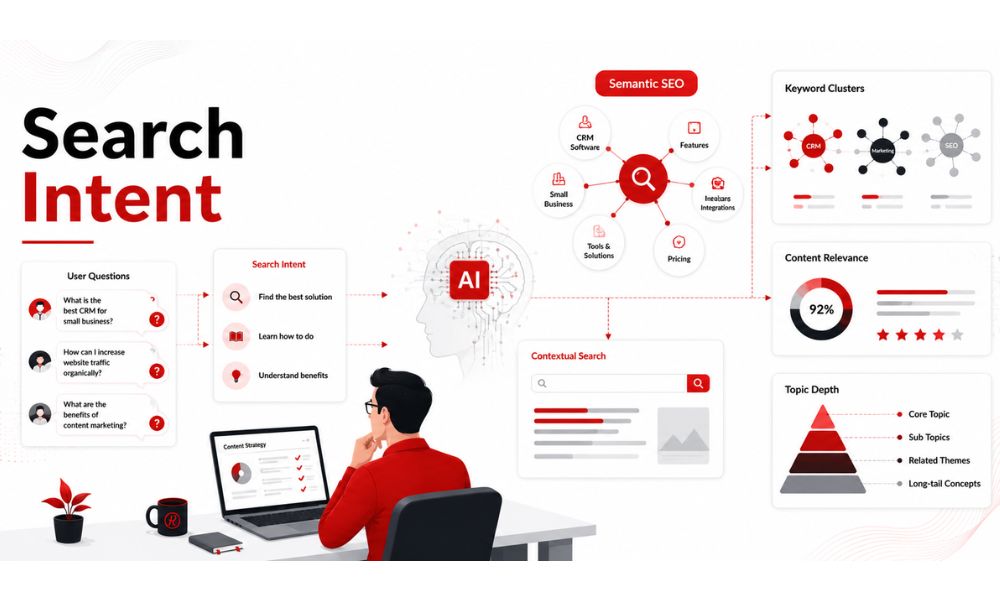
AI-powered search engines understand context and semantic meaning much better than older algorithms. This is why keyword-heavy SEO tactics are becoming less effective.
Previously, businesses often created separate pages targeting variations like:
- seo search engine optimization
- search optimization seo
- optimize seo
- engine optimization search
Modern AI systems understand these phrases are closely related.
Today, search engines analyze:
- intent
- relevance
- topic depth
- content quality
- contextual meaning
- user satisfaction
This is changing how businesses approach SEO content strategy.
Instead of publishing dozens of disconnected articles, businesses now benefit more from building comprehensive content ecosystems around related topics.
For example, websites focused on SEO and digital marketing can strengthen authority by publishing connected content about:
- AI SEO tools
- local search engine optimization
- on page SEO optimization
- website SEO optimization
- search engine marketing
- voice search optimization
- SEO website design
- content marketing SEO
When these topics are connected through strong internal linking, AI systems better understand domain expertise and topical authority.
Structured Content Silos Are Becoming Essential
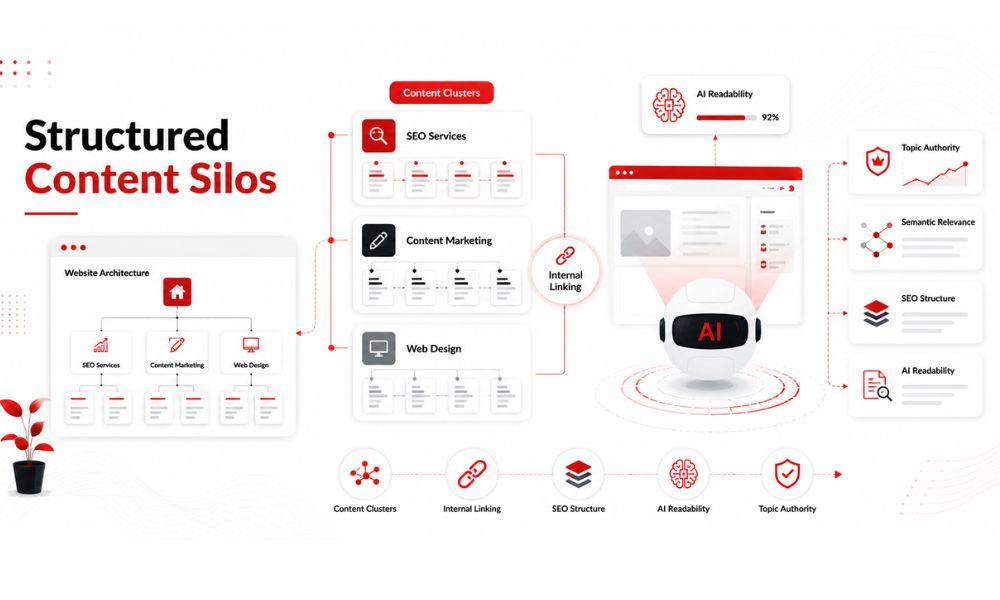
AI Overviews prioritize websites that demonstrate topical expertise through structured content silos. Clear internal linking between blogs and parent services helps AI understand contextual relationships and domain authority more effectively.
For example, this article naturally connects to content about:
- Generative Engine Optimization (GEO)
- Voice Search Optimization Trends
- Content Authority vs. Content Volume in SEO
- How buyer intent affects SEO performance
- Local SEO strategies that increase revenue
This type of structure helps AI systems understand:
- topical depth
- semantic relevance
- service expertise
- content relationships
Search engine optimization and digital marketing strategies are becoming increasingly dependent on this type of semantic organization.
Topical Authority Is More Important Than Ever
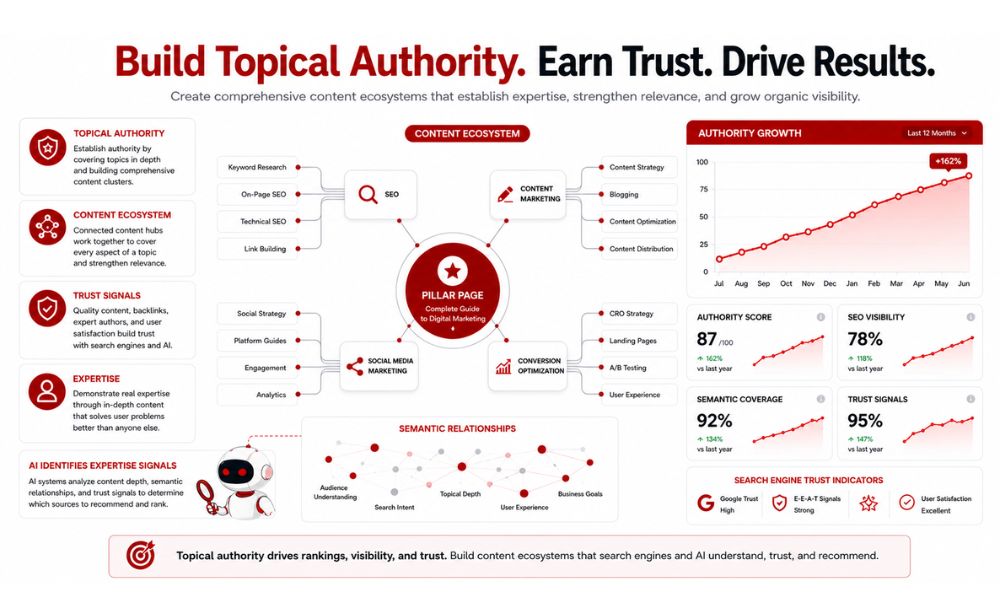
One of the biggest shifts in AI SEO is the growing importance of topical authority.
Search engines increasingly favor websites that consistently publish useful, high-quality content around related subjects. Instead of evaluating pages in isolation, AI systems now evaluate broader content ecosystems.
For example, a company SEO strategy focused on AI visibility could include connected content around:
- SEO and content strategy
- AI search optimization
- local SEO
- website performance
- search engine marketing
- technical SEO
- SEO optimized content
- voice search optimization
This creates stronger contextual relevance.
Businesses that publish high-quality content consistently around related topics are more likely to appear in:
- AI Overviews
- featured snippets
- conversational search results
- voice search responses
This is one reason why content quality matters more than content quantity in 2026.
AI SEO Tools Are Changing SEO Workflows
AI tools for SEO are transforming how businesses research, optimize, and structure content.
Modern AI SEO tools can help with:
- keyword clustering
- semantic analysis
- competitor research
- SEO audit website analysis
- content optimization
- internal linking
- technical SEO recommendations
Businesses increasingly use AI for SEO to:
- identify content gaps
- improve on-page SEO
- strengthen semantic structure
- optimize metadata
- analyze search trends
- improve search engine optimization workflows
However, AI-generated content alone is not enough.
Search engines are increasingly rewarding:
- originality
- expertise
- trustworthiness
- firsthand experience
- unique insights
Low-value AI-generated articles without real expertise are becoming easier for algorithms to identify.
This is why businesses need a balance between AI efficiency and human strategy.
The relationship between AI-generated content and SEO performance is becoming one of the most important discussions in modern digital marketing.
Technical SEO Is More Important in AI Search
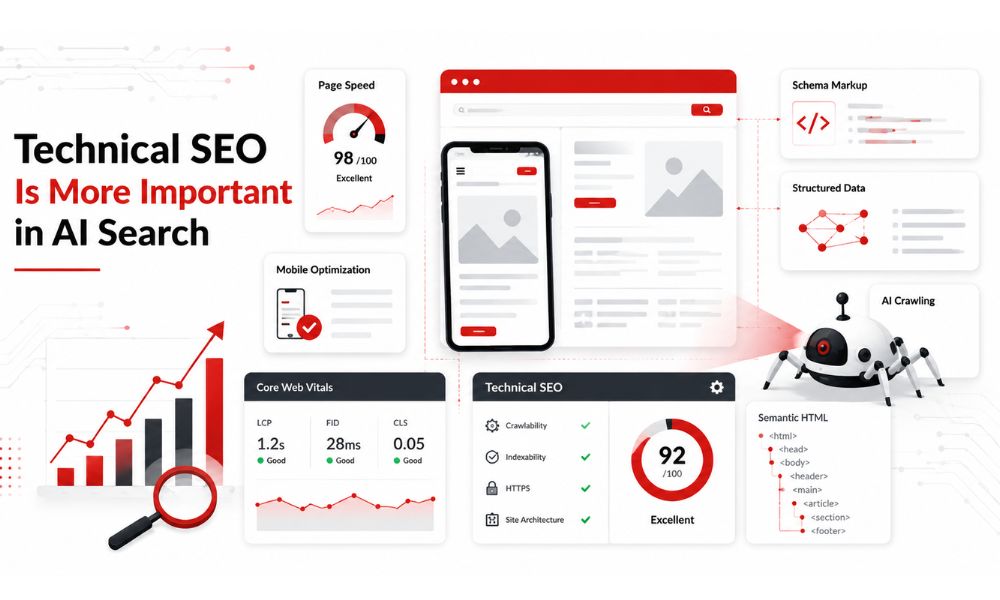
AI-powered search engines rely heavily on technical SEO signals to understand website structure and content relationships.
Important technical SEO factors in 2026 include:
- mobile-first website design
- page speed
- schema markup
- semantic HTML structure
- crawlability
- clean internal linking
- structured navigation
Technical website performance directly affects visibility across:
- Google AI search
- AI Overviews
- conversational search
- mobile search
- voice search optimization
Businesses investing in web design and SEO together are often seeing stronger long-term search performance.
Website speed has become especially important because AI systems prioritize fast-loading, user-friendly experiences. Google has repeatedly emphasized the importance of page experience in modern search ranking systems through resources like Google Search Central.
Businesses redesigning websites in 2026 are also focusing more heavily on:
- mobile-first layouts
- conversion-focused UX
- semantic page structure
- accessibility
- AI readability
These factors influence both SEO performance and user engagement.
Local Search Engine Optimization Still Matters
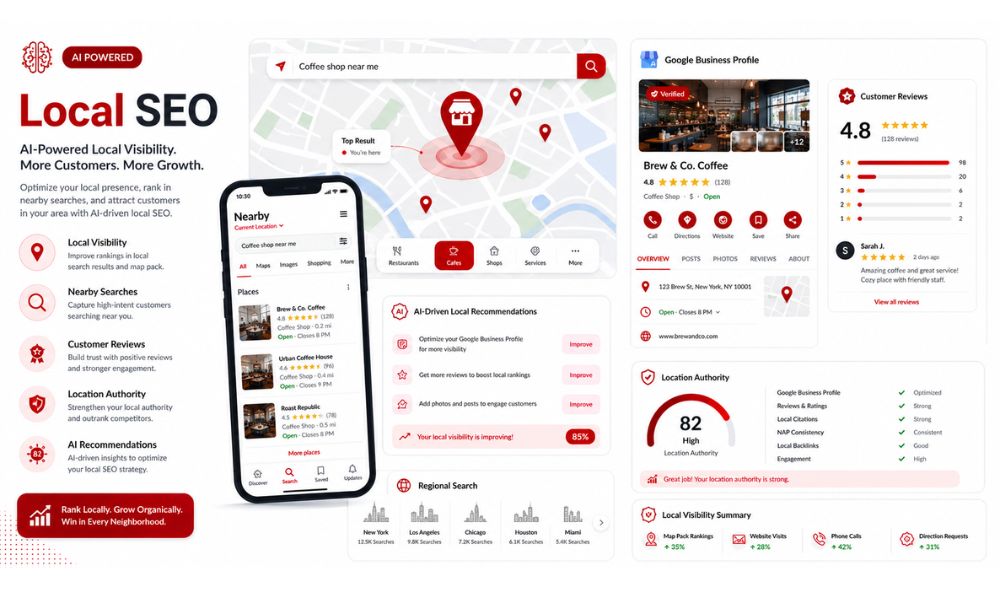
Even as AI changes search behavior, local search engine optimization remains one of the strongest digital marketing channels for local businesses.
AI systems still rely heavily on:
- Google Business Profiles
- localized content
- customer reviews
- geographic relevance
- local authority signals
Businesses can strengthen local SEO visibility by:
- creating localized landing pages
- optimizing location-specific content
- improving local citations
- building regional authority
- strengthening review signals
The relationship between local SEO and AI search is becoming increasingly important because AI systems prioritize trusted local entities with strong contextual relevance.
Businesses targeting local audiences are also investing more heavily in:
- hyper-personalized marketing
- localized SEO content
- conversion-focused website experiences
- mobile-first optimization
Voice Search Optimization Is Growing Again
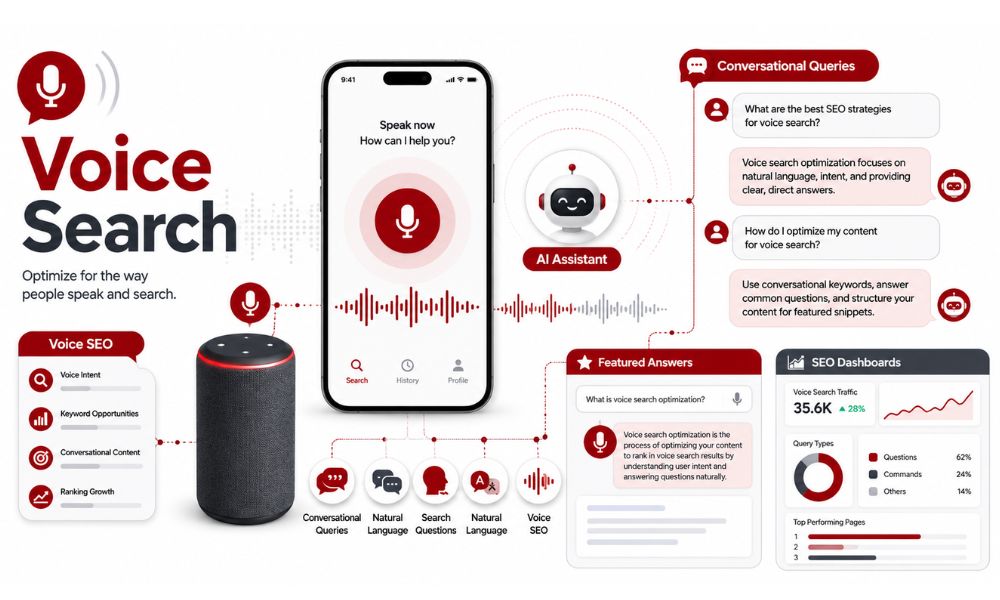
Voice search optimization is becoming more important because AI assistants are changing how people search online.
Users increasingly ask conversational questions like:
- “What does SEO mean?”
- “How does AI affect search engine optimization?”
- “How can I improve SEO website performance?”
- “What is the future of SEO?”
This is why SEO content should now include:
- natural language
- question-based headings
- concise answers
- semantic structure
- conversational formatting
Voice search optimization also improves visibility for:
- AI assistants
- AI Overviews
- featured snippets
- mobile search
- conversational search engines
This shift is pushing businesses to create content that feels more human, direct, and contextually useful.
SEO and Digital Marketing Are Becoming Fully Integrated
Modern search engine optimization and digital marketing no longer operate separately.
Search engines increasingly evaluate broader brand signals, including:
- social media visibility
- engagement metrics
- branded searches
- website interactions
- user retention
- content authority
This is why businesses are integrating:
- SEO and social media
- search engine marketing
- content marketing SEO
- digital advertising
- conversion-focused web design
- AI-driven personalization
AI systems increasingly reward brands that demonstrate consistency across multiple digital channels.
The future of SEO in marketing is becoming less about isolated ranking tactics and more about building strong digital ecosystems.
Human Expertise Still Matters in AI SEO
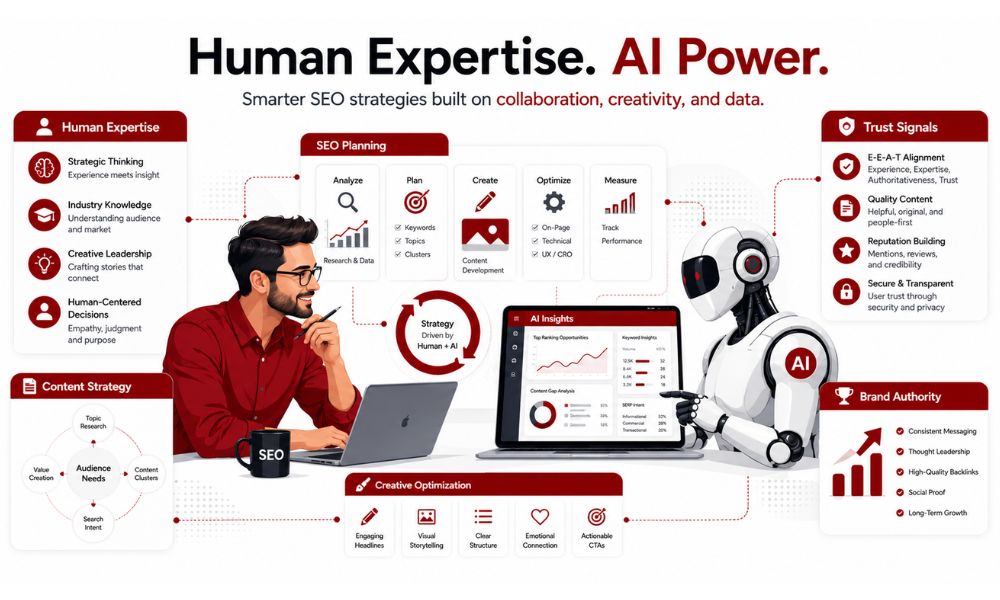
One of the biggest misconceptions about AI SEO is that AI will replace human expertise.
In reality, the rise of AI-generated content is making authentic expertise more valuable.
Search engines increasingly prioritize:
- original insights
- real-world expertise
- trustworthiness
- firsthand experience
- high-quality analysis
This aligns closely with Google’s E-E-A-T principles:
- Experience
- Expertise
- Authoritativeness
- Trustworthiness
Businesses relying entirely on automated content generation are struggling to build sustainable authority.
The future of SEO with AI is not automation replacing strategy.
It is AI supporting human expertise, faster workflows, and smarter optimization.
The Future of SEO Is Visibility, Trust, and Relevance
The future of search engine optimization is no longer only about rankings and traffic.
AI-powered search systems are changing SEO into a broader visibility ecosystem built around:
- topical expertise
- semantic relevance
- technical optimization
- structured content
- user trust
- AI readability
Businesses that continue relying on outdated keyword-heavy SEO strategies will struggle as AI-driven search evolves further.
The brands succeeding in 2026 are building:
- interconnected content ecosystems
- AI-readable websites
- strong topical authority
- high-quality user experiences
- expert-driven SEO strategies
At Red Rattler Creative, SEO strategy is built around how modern search actually works today, combining technical SEO, AI visibility, structured content strategy, and human-centered digital marketing to create sustainable long-term growth.
Frequently Asked Questions
How is AI changing SEO in 2026?
AI is changing SEO by shifting search engines from keyword-focused ranking systems toward answer-driven search experiences. Platforms like Google AI search and ChatGPT now summarize information directly in search results, making topical authority, semantic structure, and user intent more important than keyword repetition alone.
What is the future of SEO with AI?
The future of SEO with AI focuses on:
- topical authority
- semantic optimization
- conversational search
- AI-readable content
- Generative Engine Optimization (GEO)
- Answer Engine Optimization (AEO)
- structured content ecosystems
Businesses will increasingly optimize content for both users and AI retrieval systems.
Does AI-generated content hurt SEO?
AI-generated content does not automatically hurt SEO, but low-quality content without originality or expertise often performs poorly. Businesses using AI for SEO should combine automation with strong editing, strategy, and human expertise.
Content quality, structure, and trustworthiness matter far more than whether AI assisted in the workflow.
Why are AI Overviews affecting website traffic?
AI Overviews provide direct answers inside search results, reducing the need for users to click websites for informational queries. This is increasing zero-click search behavior across many industries.
Businesses are now focusing more on brand visibility, authority, and AI citations instead of relying only on organic traffic volume.
Why is topical authority important for SEO?
Topical authority helps search engines understand that your website consistently publishes high-quality content around a subject. This improves trust, semantic relevance, and visibility in both traditional search and AI-generated search experiences.
Structured content silos and strong internal linking help reinforce topical authority further.
How can businesses improve SEO in 2026?
Businesses can improve SEO by:
- building structured content silos
- improving technical SEO
- optimizing for AI Overviews
- strengthening internal linking
- creating high-quality SEO content
- improving website speed and mobile usability
- publishing expert-driven content consistently
What is the difference between SEO and GEO?
Traditional search engine optimization focuses mainly on rankings, clicks, and organic traffic.
GEO focuses more on:
- AI visibility
- answer engine citations
- semantic relevance
- conversational search
- entity authority
- AI-generated summaries
In 2026, businesses need both SEO and GEO strategies working together.
How do AI SEO tools help businesses?
AI SEO tools help businesses:
- analyze search intent
- identify keyword opportunities
- improve content structure
- optimize metadata
- strengthen internal linking
- audit technical SEO
- identify content gaps
These tools improve workflow efficiency, but human expertise is still essential for strategy and quality control.
Is keyword optimization still important in SEO?
Yes, keyword optimization still matters, but modern search engines understand context and semantic relationships much better than before.
Businesses should focus more on:
- search intent
- topical relevance
- natural language
- user questions
- semantic coverage
instead of repeating exact-match keywords excessively.
How does voice search affect SEO strategy?
Voice search optimization is becoming more important because users increasingly search using conversational questions through AI assistants and mobile devices.
Voice-friendly SEO content usually includes:
- concise answers
- conversational phrasing
- FAQ sections
- natural language
- semantic structure
This also improves visibility for AI Overviews and featured snippets.
Why does website speed matter for SEO?
Website speed affects:
- user experience
- bounce rates
- engagement
- mobile usability
- crawl efficiency
Search engines prioritize fast-loading websites because they create better user experiences. Slow websites often struggle with both rankings and conversions.
How important is local SEO in 2026?
Local search engine optimization remains extremely important for businesses targeting geographic markets.
AI-powered search systems still prioritize:
- localized relevance
- Google Business Profiles
- reviews
- location pages
- local authority signals
Businesses with strong local SEO strategies often gain higher visibility for high-intent searches.
What role does content marketing play in SEO?
Content marketing and SEO work together to build:
- topical authority
- organic visibility
- user trust
- semantic relevance
- keyword coverage
High-quality content helps search engines understand expertise while also improving engagement and brand authority.
How does internal linking improve SEO?
Internal linking helps search engines and AI systems understand:
- topic relationships
- page hierarchy
- contextual relevance
- website structure
Strong internal linking also improves user navigation and distributes authority across important pages.
What are the biggest SEO trends in 2026?
Some of the biggest SEO trends in 2026 include:
- AI Overviews
- Generative Engine Optimization
- Answer Engine Optimization
- zero-click search
- semantic search optimization
- voice search optimization
- topical authority
- AI-readable content structure
- entity-based SEO
- mobile-first optimization
These trends are shaping the future of search engine optimization across every industry.