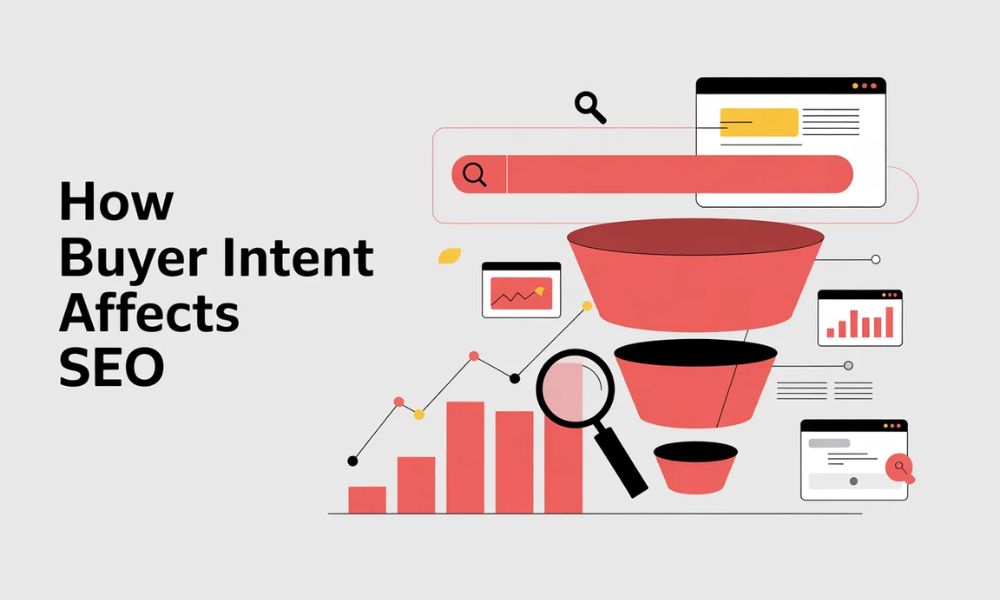
Buyer intent affects SEO because search engines prioritize content that directly answers the reason behind a user’s search query. When a page clearly aligns with what a person wants to learn, compare, or purchase, search engines such as Google are more likely to rank it higher in results and feature it in AI-generated summaries.
In simple terms, SEO success is no longer about keywords alone. It is about understanding why someone is searching and providing content that fully satisfies that intent.
Websites that organize their content around search intent, keyword research, and the buyer journey tend to achieve stronger rankings, better engagement metrics, and higher conversions. When search engines recognize that a website consistently provides useful information on a topic, they begin to view it as a trusted source of expertise.
This guide explains:
- How Buyer Intent Affects Seo
- How To Identify Search Intent
- How To Build Content Silos That Improve Rankings
- How Internal Linking Strengthens Topical Authority
- How AI-Driven Search Engines Evaluate Intent-Based Content
What Is SEO and Why Search Intent Matters
Search engine optimization (SEO) is the process of improving a website so it appears higher in search engine results pages.
Search engines evaluate thousands of ranking signals to determine which pages provide the most helpful answer to a search query.
According to Google’s official guide to SEO fundamentals, search algorithms analyze signals such as:
- keyword relevance
- page experience
- website authority
- content quality
- user engagement
However, modern search algorithms go much deeper than matching keywords. They attempt to understand search intent.
Search intent refers to the purpose behind a search query.
For example:
Someone searching “what is SEO” wants educational information.
Someone searching “SEO services pricing” is likely evaluating agencies.
Someone searching “hire SEO expert near me” is ready to take action.
Understanding this difference allows businesses to create content that answers the user’s needs at each stage of the buyer journey.
What Is Search Intent in SEO

Search intent describes what a user is trying to accomplish when they search online.
Google typically categorizes intent into several primary types.
Informational Search Intent
Informational intent occurs when a user wants to learn something.
Common informational searches include:
- what is seo
- how seo works
- seo guide for beginners
- learn seo
Informational content usually appears in the form of blog posts, tutorials, and guides.
Publishing educational articles is one of the most effective ways to attract early-stage users. how blogging increases local seo visibility explains how educational content helps businesses expand keyword coverage and improve organic visibility.
Commercial Search Intent
Commercial intent occurs when users are researching products or services before making a decision.
Example searches include:
- best SEO tools
- SEO software comparison
- top SEO agencies
At this stage, users are evaluating options and looking for recommendations.
Comparison articles and case studies perform well here because they help users understand the differences between solutions.
Transactional Search Intent
Transactional intent indicates the user is ready to take action.
Example searches include:
- improve website SEO
- hire SEO agency
- SEO services near me
These searches typically lead to service pages or product pages.
Understanding these intent categories helps businesses build structured content that serves users throughout their journey.
The Role of SEO Keyword Research

SEO keyword research helps businesses understand what people search for online and how competitive those searches are.
Effective keyword research identifies:
- search volume
- competition
- keyword intent
- content opportunities
Professional tools such as Ahrefs, Semrush, and Google Keyword Planner allow marketers to analyze search demand and identify high-value keywords.
Long-tail keywords are particularly important because they reveal more specific intent.
For example:
“SEO tools” is a broad keyword with high competition.
“SEO tools for small business” reveals a more specific user need and often converts better.
Keyword research also helps identify opportunities for content clusters and internal linking.
Understanding Buyer Intent in SEO

Buyer intent describes how close a user is to making a purchasing decision.
In digital marketing, users typically move through three stages.
Awareness Stage
The user is discovering a problem and researching information.
Example searches include:
- what is SEO
- learn SEO
- SEO basics
At this stage, educational content performs best.
Consideration Stage
The user understands the problem and begins evaluating solutions.
Example searches include:
- best SEO tools
- SEO agency reviews
- SEO strategy examples
Content such as comparisons, guides, and case studies helps users make informed decisions.
Decision Stage
The user is ready to take action.
Example searches include:
- improve website SEO
- SEO services
- hire SEO agency
Pages optimized for conversion are most effective at this stage.
Businesses that create content for all three stages build stronger trust and visibility with search engines.
Why Buyer Intent Improves SEO Performance
Understanding buyer intent allows businesses to attract the right audience rather than just increasing traffic.
When content aligns with search intent, several SEO benefits occur.
Higher Search Rankings
Search engines prioritize pages that answer user queries clearly.
When content matches the intent behind a search, it is more likely to appear in top results and AI summaries.
Better User Engagement
Visitors stay longer on pages that solve their problems.
Longer session duration, lower bounce rates, and higher engagement signal quality to search engines.
Higher Conversion Rates
Traffic alone does not generate revenue.
Users searching with strong intent are more likely to become customers.
For example, someone searching “improve website SEO” is much more likely to convert than someone searching “what is SEO.”
How Content Silos Improve SEO Authority

Modern search engines analyze topical expertise.
Websites that organize their content into structured topic clusters perform better in search rankings.
A content silo groups related articles around a core topic.
For example, an SEO content cluster might include:
- SEO fundamentals
- keyword research guides
- search intent strategies
- technical SEO tutorials
Internal linking connects these articles so search engines understand the relationship between topics.
For example, understanding the difference between search strategies is explained in local SEO vs organic SEO.
These connections strengthen domain authority and improve crawlability.
How Blogging Supports Buyer Intent SEO

Blogging is one of the most effective ways to target informational search queries.
Educational content attracts users early in their research process.
Businesses that consistently publish helpful content can capture searches related to:
- SEO guide
- learn SEO
- SEO tips for beginners
Blogging also supports local marketing strategies. Businesses that want to attract regional customers can explore local SEO strategies to increase revenue to understand how local search optimization drives traffic and sales.
A strong blogging strategy expands keyword coverage and strengthens internal linking across a website.
The Role of Website Experience in SEO

Search engines evaluate how users interact with a website.
Factors such as page speed, mobile design, and usability influence rankings.
A slow website can reduce engagement and lower conversion rates.
For example, how website speed impacts your revenue explains how faster websites improve both user experience and business performance.
Mobile usability is equally important. Since most searches happen on smartphones, businesses must prioritize responsive design.
Following mobile-first website design best practices ensures websites perform well across all devices.
Search engines increasingly reward websites that provide excellent user experiences.
How AI Is Changing SEO and Search Intent

Artificial intelligence is transforming how search engines interpret content.
Modern algorithms analyze:
- context
- semantic meaning
- user behavior
This shift means that simply repeating keywords is no longer enough.
Websites must provide comprehensive answers to topics.
AI-driven search systems often generate summaries by analyzing multiple authoritative sources.
Businesses can learn more about this shift through generative engine optimization (GEO), which explains how to optimize content for AI-driven search results.
Future search algorithms will increasingly prioritize websites that demonstrate consistent expertise within a topic.
Combining SEO With Paid Search Insights
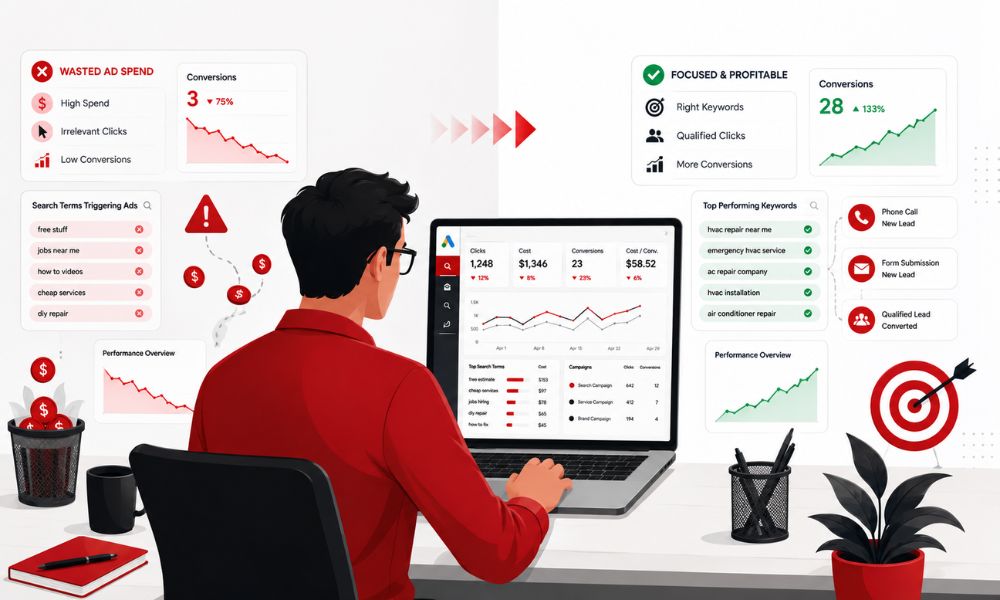
Although SEO focuses on organic traffic, paid advertising can provide valuable data about buyer intent.
Advertising platforms such as Google Ads allow businesses to test keywords quickly.
Insights from paid campaigns help identify high-intent queries that convert well.
For example, how to improve google ads CTR explains how improving click-through rates increases ad visibility and performance.
Businesses can also explore performance max campaigns explained to understand how automated campaigns reach audiences across multiple channels.
When SEO and paid advertising strategies work together, companies gain a deeper understanding of customer behavior.
Building an SEO Strategy Around Buyer Intent
Creating an effective SEO strategy requires mapping keywords to stages of the buyer journey.
Example keyword structure:
Informational stage
- learn SEO
- SEO guide
- SEO basics
Research stage
- SEO tools
- SEO software comparison
- best SEO strategies
Decision stage
- improve website SEO
- optimize SEO
- SEO services
Educational blog posts should naturally link to solution-focused pages.
For businesses seeking professional optimization support, exploring SEO services can provide insight into how expert strategies improve rankings and organic visibility.
This structure strengthens both search engine understanding and user experience.
Common SEO Mistakes When Targeting Buyer Intent
Many websites struggle with SEO because they misunderstand user intent.
Common mistakes include:
Targeting Only High-Volume Keywords
High search volume does not guarantee conversions.
Lower-volume keywords often reveal stronger intent.
Ignoring Informational Content
Educational articles build trust and attract future customers.
Weak Internal Linking
When related articles are not connected, search engines struggle to understand topic relationships.
Internal linking strengthens topical authority and improves crawlability.
The Future of Buyer Intent and SEO

Search engines are evolving rapidly with AI and machine learning.
Future ranking systems will analyze:
- user behavior patterns
- topic relationships
- domain expertise
Websites that build structured content clusters and strong internal linking networks will have a significant advantage.
Search engines increasingly reward websites that demonstrate deep knowledge of a subject rather than isolated articles.
Businesses that invest in intent-driven SEO strategies will be better positioned for long-term organic growth.
Final Thoughts
Understanding how buyer intent affects SEO helps businesses attract the right audience, improve search rankings, and increase conversions. When content aligns with search intent and is supported by strong internal linking and structured content silos, search engines can better understand a website’s topical authority.
As search algorithms continue to evolve with AI, focusing on intent-driven content will remain essential for long-term organic visibility. At Red Rattler Creative, SEO strategies are built around search intent, structured content, and data-driven optimization to help businesses grow their online presence and attract qualified traffic.