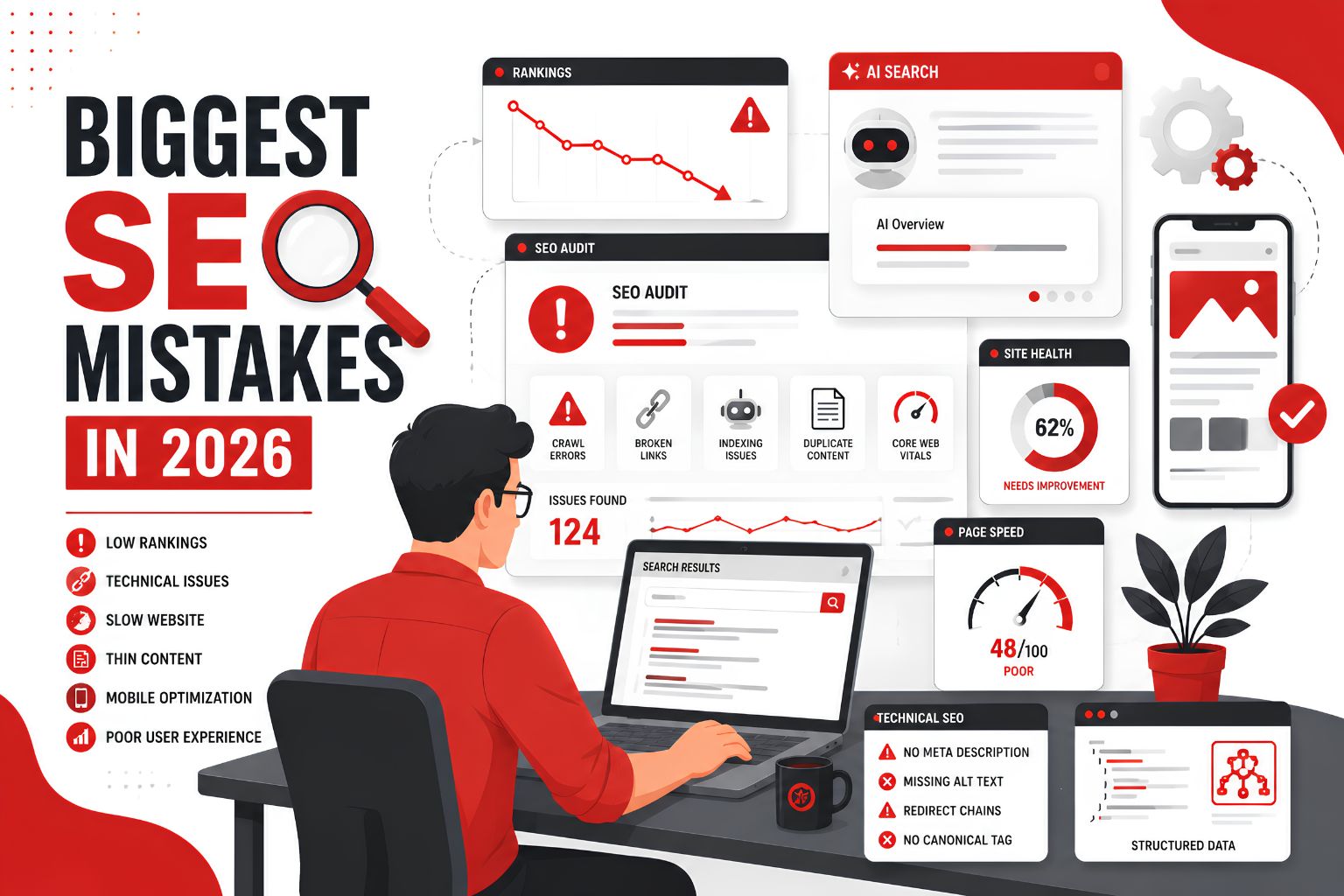
Search optimization in 2026 looks very different from what it did even two years ago.
Ranking well is no longer just about keywords, backlinks, and publishing blog posts consistently. Search engines now evaluate user experience, topical authority, entity relevance, AI visibility, content usefulness, engagement signals, and technical performance together.
At the same time, AI-powered search tools like ChatGPT, Gemini, Perplexity, and Google AI Overviews are changing how users discover information online. Websites that fail to adapt are losing visibility even when they technically “rank.”
Many businesses unknowingly hurt their organic performance through avoidable SEO mistakes that impact both traditional search rankings and AI retrieval visibility.
Some issues are technical.
Others are content-related.
Many come from outdated optimization tactics that no longer work.
This guide breaks down the biggest SEO mistakes in 2026, why they matter, how they affect rankings and AI visibility, and what you can do to fix them.
What You’ll Learn in This Guide
- Common SEO mistakes hurting rankings
- Technical SEO issues affecting crawlability
- Content optimization problems reducing visibility
- AI search optimization mistakes
- GEO (Generative Engine Optimization) best practices
- User experience issues impacting engagement
- Mobile and website speed problems
- Keyword strategy mistakes
- Internal linking issues
- Local SEO problems
- How to improve visibility in AI-generated answers
1. Ignoring Search Intent
One of the biggest SEO mistakes in 2026 is creating content that does not match what users actually want.
Search engines have become significantly better at understanding intent. If your content does not align with the reason behind the query, rankings usually drop quickly.
For example:
- Someone searching “best CRM for small business” expects comparisons and recommendations
- Someone searching “how does a CRM work” wants educational information
- Someone searching “buy CRM software” has transactional intent
Publishing the wrong content type for the query leads to low engagement and weak rankings.
Why It Hurts Rankings
Google tracks engagement signals closely:
- Bounce rate
- Dwell time
- User interaction
- Scroll behavior
- Click satisfaction
If users quickly leave your page, search systems interpret the content as low relevance.
AI systems also prioritize intent-aligned answers during retrieval.
How to Fix It
Before creating content:
- Analyze the SERP
- Study featured snippets
- Review the People Also Ask sections
- Identify whether the intent is informational, commercial, navigational, or transactional
Businesses improving buyer-focused optimization often see stronger conversion performance after understanding how buyer intent affects SEO
2. Publishing Thin Content

Thin content remains one of the most common SEO issues across websites.
Many pages still contain:
- Surface-level explanations
- Generic AI-written paragraphs
- Minimal value
- Repetitive information
- Weak expertise signals
In 2026, content depth matters more than content volume.
Search engines increasingly reward:
- Original insights
- Real expertise
- Unique perspectives
- First-hand examples
- Clear topical authority
Why It Hurts Rankings
Thin content struggles because it:
- Fails to satisfy users
- Lacks semantic depth
- Provides weak entity associations
- Reduces trust signals
- Limits AI retrieval visibility
AI search systems prefer comprehensive pages that clearly answer questions.
How to Fix It
Create content that includes:
- Expert explanations
- Real examples
- Statistics
- Original commentary
- FAQs
- Actionable solutions
- Supporting visualscontent authority vs. content volume
Brands prioritizing authority over mass publishing are seeing stronger long-term performance, and the shift from volume to authority is becoming a defining SEO strategy for 2026.
3. Poor Website Speed
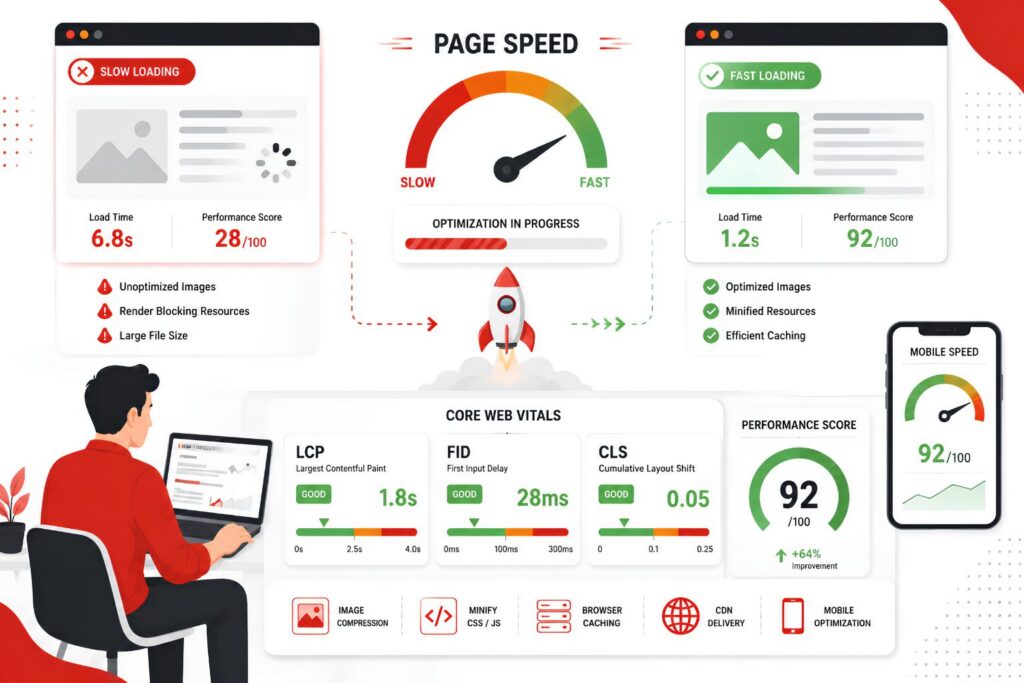
Slow websites continue to damage rankings, conversions, and AI visibility.
Page speed affects:
- User experience
- Engagement
- Crawl efficiency
- Conversion rates
- Mobile usability
Even a delay of a few seconds can significantly reduce interaction rates.
Common Website Speed Problems
- Oversized images
- Excessive JavaScript
- Render-blocking resources
- Poor hosting
- Unoptimized CSS
- Too many plugins
- Large video files
Why It Matters for AI Search
AI retrieval systems prioritize pages that are:
- Accessible
- Crawlable
- Fast
- Structured efficiently
If bots struggle to access your content quickly, visibility suffers.
How to Fix It
- Compress images
- Use lazy loading
- Minify CSS and JavaScript
- Improve hosting infrastructure
- Reduce unnecessary plugins
- Optimize Core Web Vitals
For businesses focused on growth, improving site speed is one of the few optimizations that lifts both rankings and revenue at the same time.
For performance testing, use Google PageSpeed Insights
4. Weak Internal Linking
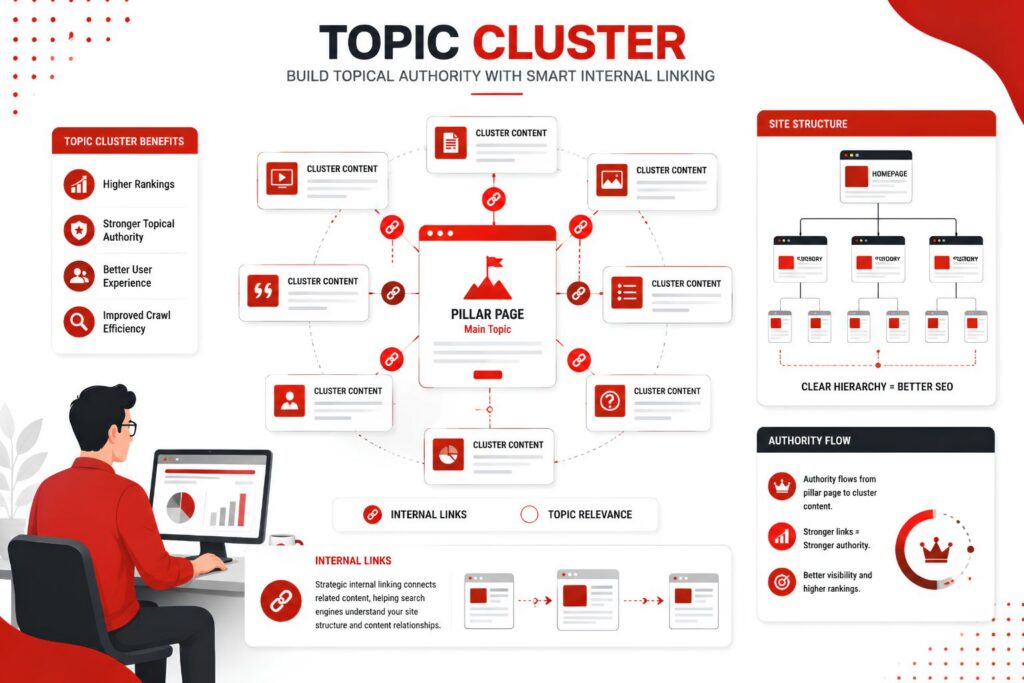
Many websites still treat internal linking as an afterthought.
This creates:
- Orphan pages
- Weak topical clusters
- Poor crawl flow
- Limited authority distribution
Internal links help search engines understand relationships between topics.
They also improve AI retrieval pathways.
Why It Hurts Rankings
Without internal linking:
- Important pages lose visibility
- Crawl efficiency decreases
- Users struggle to navigate
- Topic authority weakens
How to Fix It
Use contextual internal links naturally throughout content.
Avoid:
- Generic anchor text
- Forced keyword anchors
- Excessive linking
Instead, link naturally where users would genuinely benefit from additional context.
Done well, internal linking compounds over time, businesses targeting local markets, for instance, often see outsized returns by pairing strong site structure with a local SEO strategy.
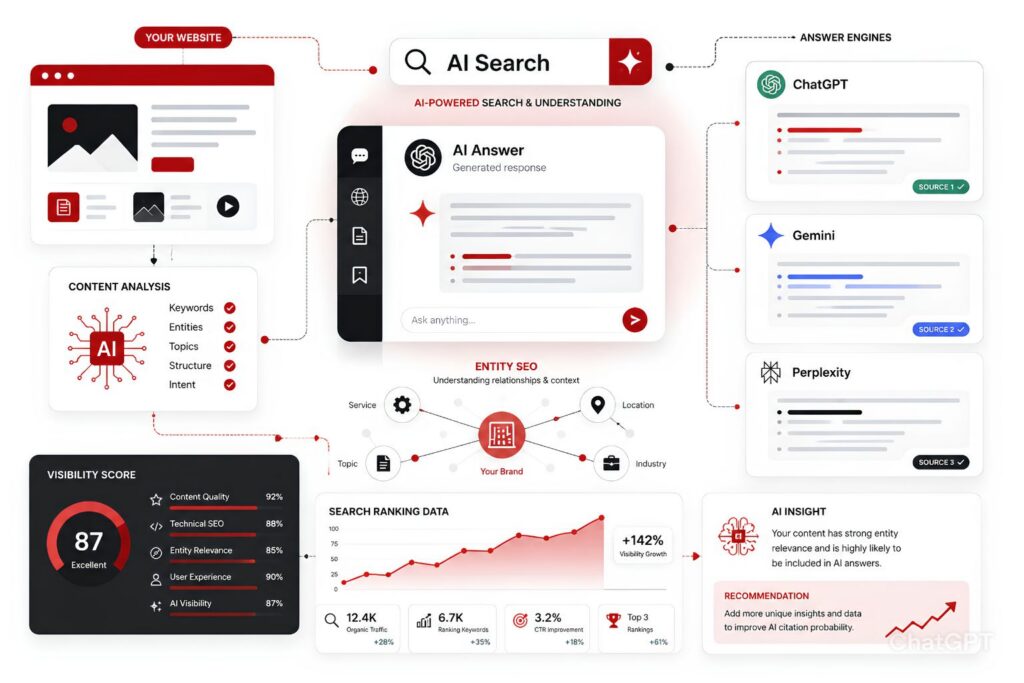
5. Ignoring AI Search Optimization
Traditional SEO alone is no longer enough.
AI-powered search systems retrieve information differently than Google’s classic rankings.
This is where GEO (Generative Engine Optimization) becomes critical.
Common GEO Mistakes
- Writing vague introductions
- Burying answers deep in content
- Weak entity signals
- Poor content structure
- Lack of conversational formatting
- No schema markup
Why It Matters
AI systems retrieve:
- Concise answers
- Structured explanations
- Entity-rich content
- Trustworthy information
Pages optimized for retrieval gain visibility across:
- ChatGPT
- Gemini
- Perplexity
- Claude
- Google AI Overviews
How to Fix It
- Answer questions clearly
- Use descriptive headings
- Add FAQ sections
- Structure content logically
- Build topical relevance
- Use schema markup
Modern businesses adapting to AI-powered visibility are increasingly investing in Generative Engine Optimization (GEO)
6. Keyword Stuffing
Keyword stuffing remains one of the most damaging SEO mistakes.
Overusing keywords makes content feel unnatural and lowers content quality.
Signs of Keyword Stuffing
- Repeating exact-match phrases excessively
- Unnatural sentence structure
- Forced keyword placement
- Robotic readability
Why It Hurts Rankings
Search engines understand semantic relationships better than ever.
Repeating keywords excessively:
- Reduces readability
- Hurts engagement
- Weakens trust signals
- Can trigger spam indicators
How to Fix It
Use:
- Semantic variations
- Natural language
- Conversational phrasing
- Topic-based optimization
Focus on covering the subject comprehensively instead of forcing keywords repeatedly.
7. Poor Mobile Optimization
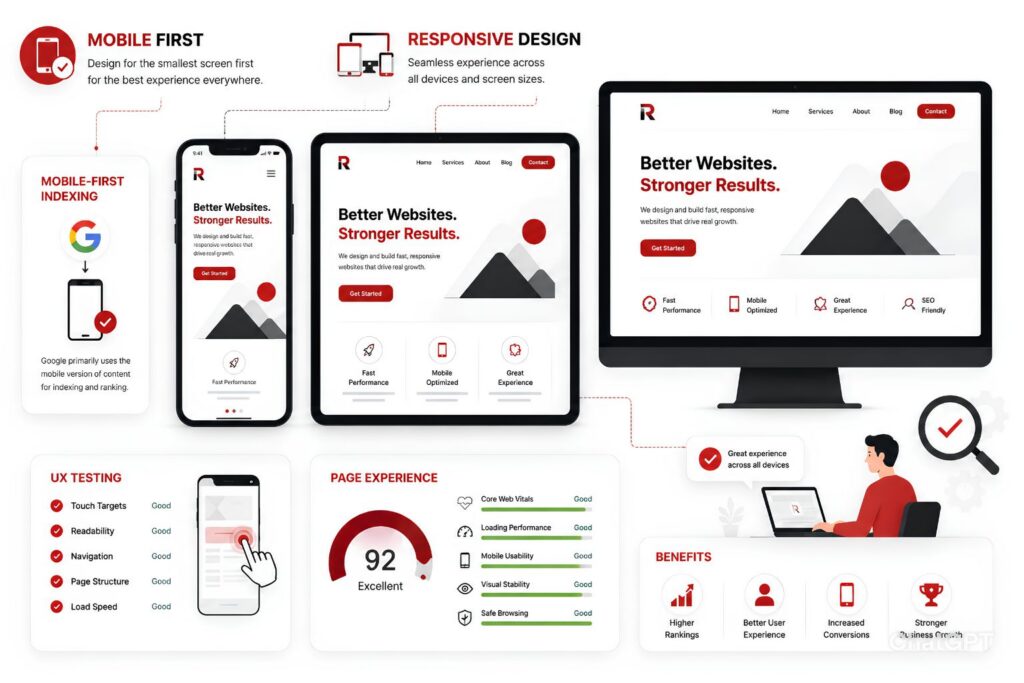
Mobile-first indexing is no longer optional.
Google primarily evaluates the mobile version of your website.
If your mobile experience is weak, rankings usually suffer.
Common Mobile SEO Problems
- Tiny fonts
- Poor responsiveness
- Intrusive popups
- Broken layouts
- Slow mobile load speed
- Difficult navigation
How to Fix It
- Use responsive design
- Optimize mobile speed
- Improve tap targets
- Reduce intrusive elements
- Test across devices
Most mobile SEO problems trace back to design decisions made early on; getting thefoundational mobile-first approach right prevents the majority of these issues from appearing at all.
8. Duplicate Content Problems
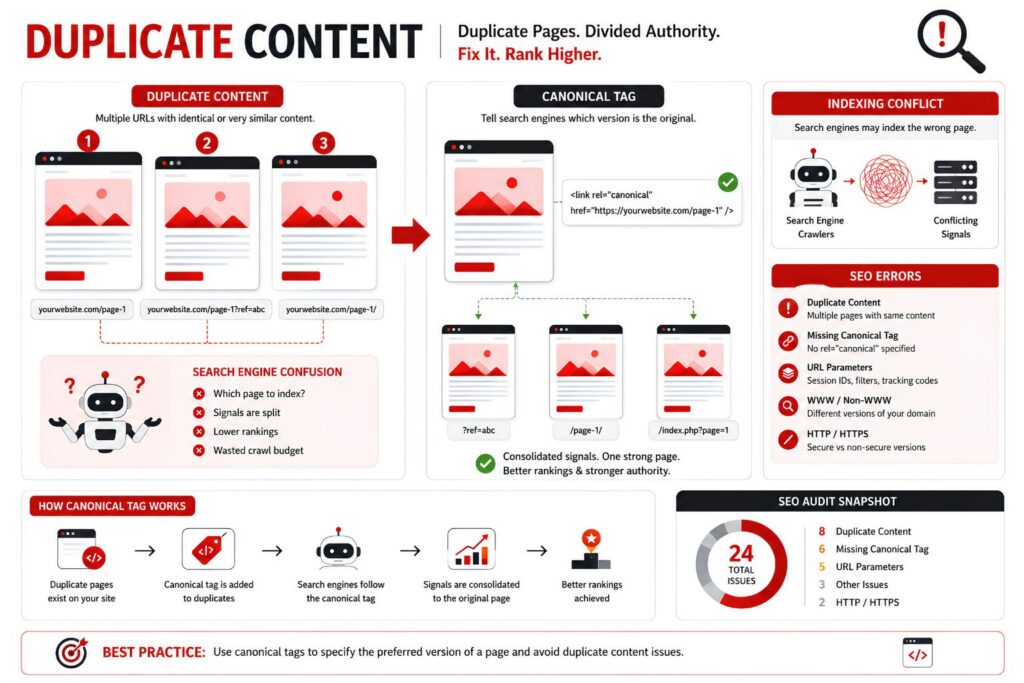
Duplicate content confuses search engines.
It can dilute rankings and create indexing issues.
Common Duplicate Content Issues
- Multiple versions of the same page
- Parameter URLs
- Similar location pages
- Product duplication
- Thin doorway pages
How to Fix It
- Use canonical tags
- Consolidate similar pages
- Create unique local content
- Avoid template-heavy duplication
City-focused pages are one of the most common sources of duplicate content; building each one with a unique structure and local context is what separates a local landing page that ranks from one that gets filtered out.
9. Ignoring Structured Data
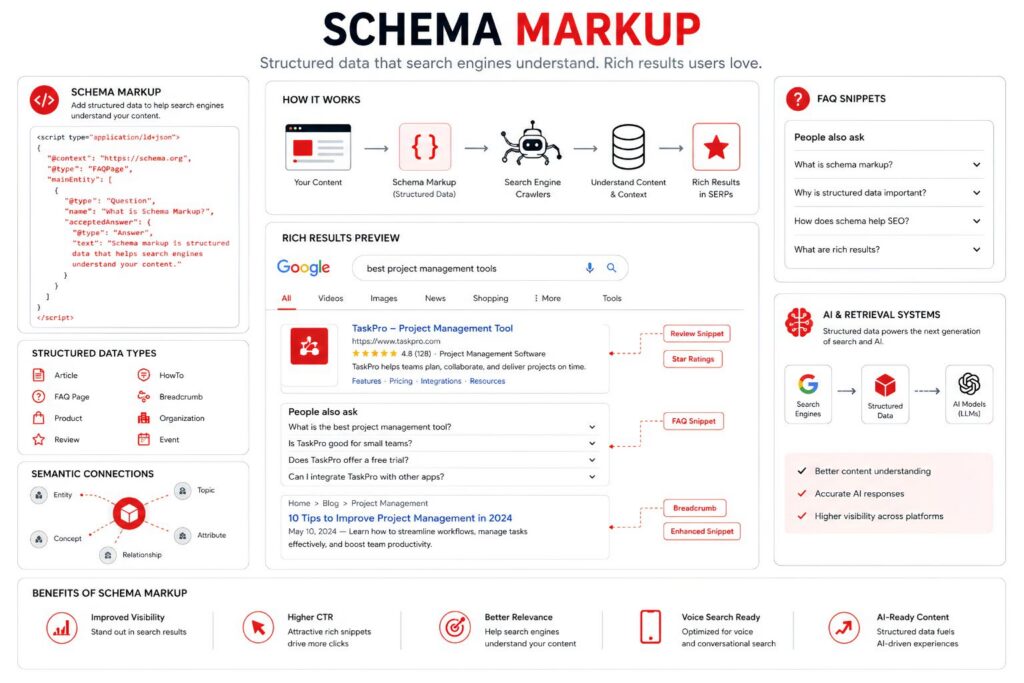
Schema markup helps search engines understand content context.
Without structured data, websites lose opportunities for enhanced visibility.
Benefits of Schema
- Rich results
- Better AI understanding
- Enhanced SERP features
- Improved entity recognition
Important Schema Types
- FAQ schema
- Article schema
- Organization schema
- LocalBusiness schema
- Product schema
Helpful Resource
Use official documentation from Schema.org
10. Weak Topical Authority
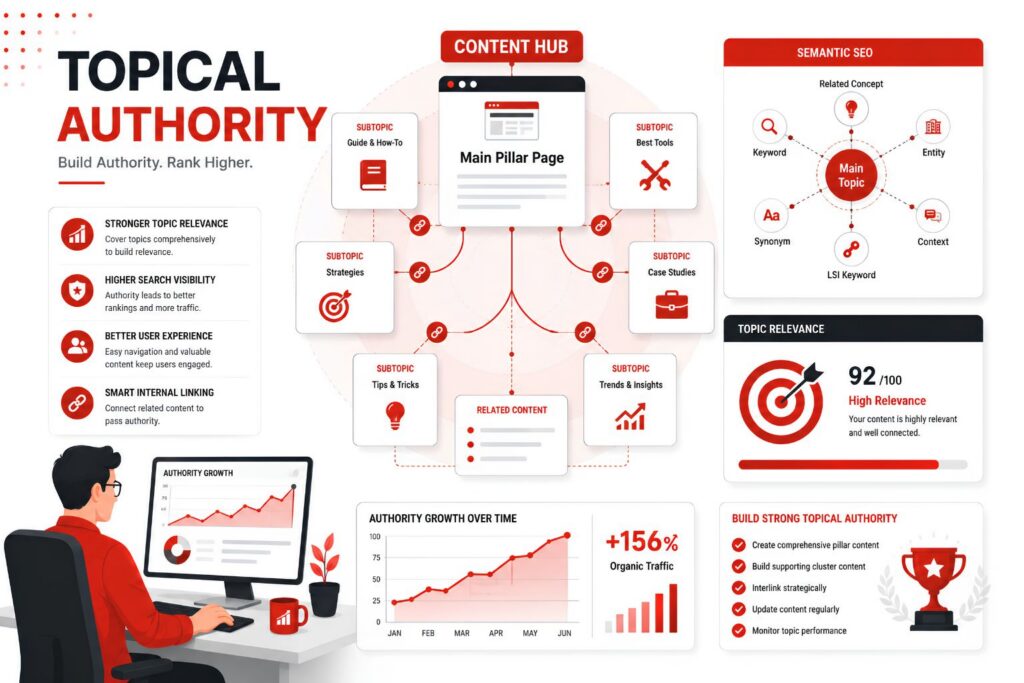
Publishing random disconnected content weakens authority.
Search engines reward websites demonstrating expertise across connected subjects.
How to Build Topical Authority
- Create content clusters
- Cover topics comprehensively
- Build semantic relationships
- Maintain consistent expertise
Topical authority is also becoming harder to build in isolation, asAI reshapes how search and content marketing work together, the websites that cluster and connect expertise early will have a significant head start.
11. Ignoring User Experience (UX)
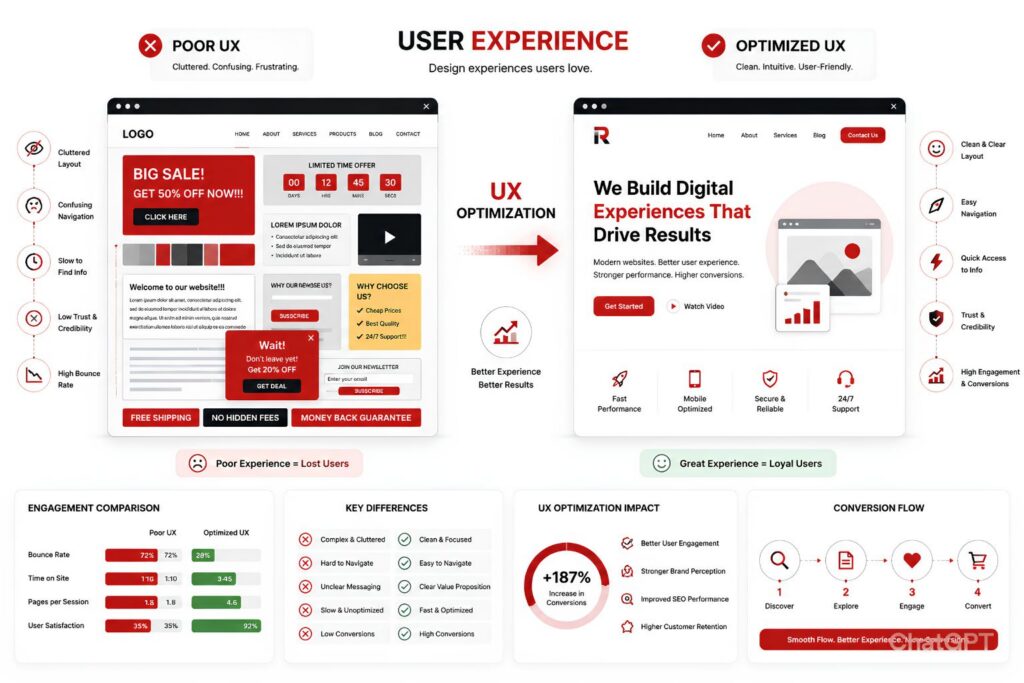
Bad user experience quietly destroys rankings.
Search engines increasingly evaluate:
- Readability
- Navigation
- Layout stability
- Accessibility
- Interaction quality
Common UX Problems
- Cluttered layouts
- Poor readability
- Aggressive ads
- Confusing navigation
- Weak visual hierarchy
How to Fix It
- Improve readability
- Use whitespace effectively
- Simplify layouts
- Improve navigation clarity
- Reduce distractions
Fixing UX also means understanding the distinction between how something looks and how it works;the difference between UI and UX is where most websites quietly lose rankings without realizing why.
12. Poor Content Formatting
Even high-quality content fails when formatting is weak.
Large text blocks reduce engagement.
AI systems also prefer structured formatting.
Best Formatting Practices
- Short paragraphs
- Clear headings
- Bullet points
- Tables
- FAQ sections
- Scannable structure
Readable formatting improves both rankings and AI retrieval performance.
13. Not Optimizing for Voice Search
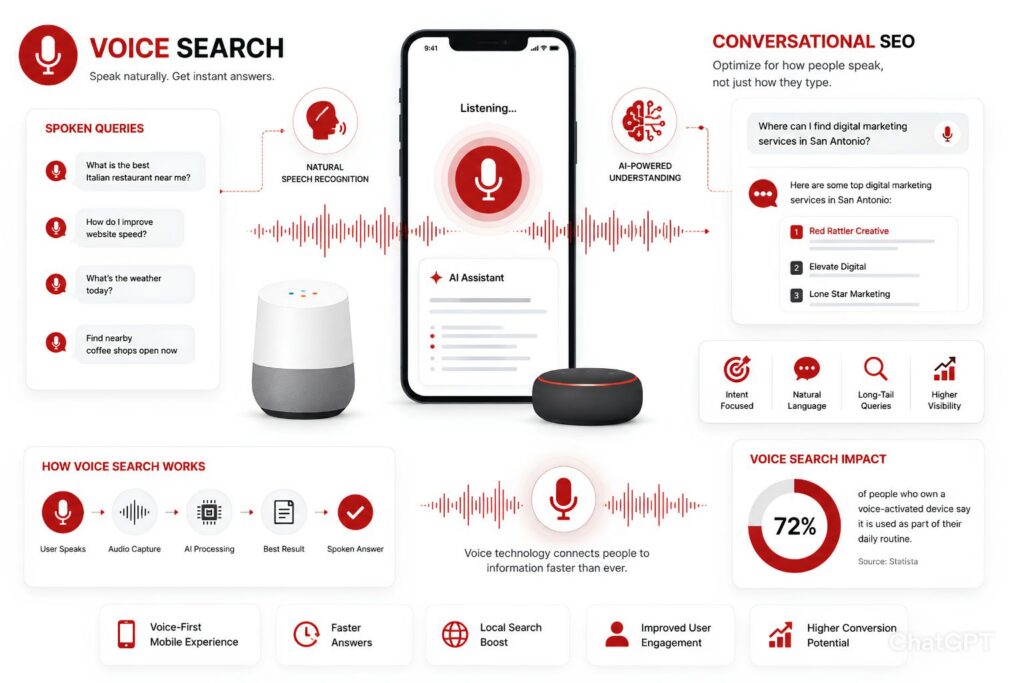
Voice search continues to grow rapidly.
Users now search conversationally.
Common Voice Search Mistakes
- Overly robotic writing
- Ignoring question-based queries
- Lack of conversational structure
How to Fix It
- Use natural language
- Add FAQs
- Target long-tail questions
- Write conversational answers
Getting this right goes deeper than adding FAQs;optimizing specifically for how voice queries work requires a different approach to structure, language, and intent.
14. Weak Meta Titles and Descriptions
Meta tags still strongly influence click-through rates.
Poor CTR can indirectly reduce visibility over time.
Common Issues
- Missing titles
- Duplicate titles
- Generic descriptions
- Keyword stuffing
- Weak messaging
How to Fix It
Write titles that are:
- Clear
- Specific
- Intent-focused
- Engaging
- Human-readable
As search visibility becomes more competitive, businesses investing in stronger paid and organic growth strategies are seeing better engagement when click-through optimization and search intent alignment work together instead of being treated as separate marketing efforts.
15. Neglecting Local SEO
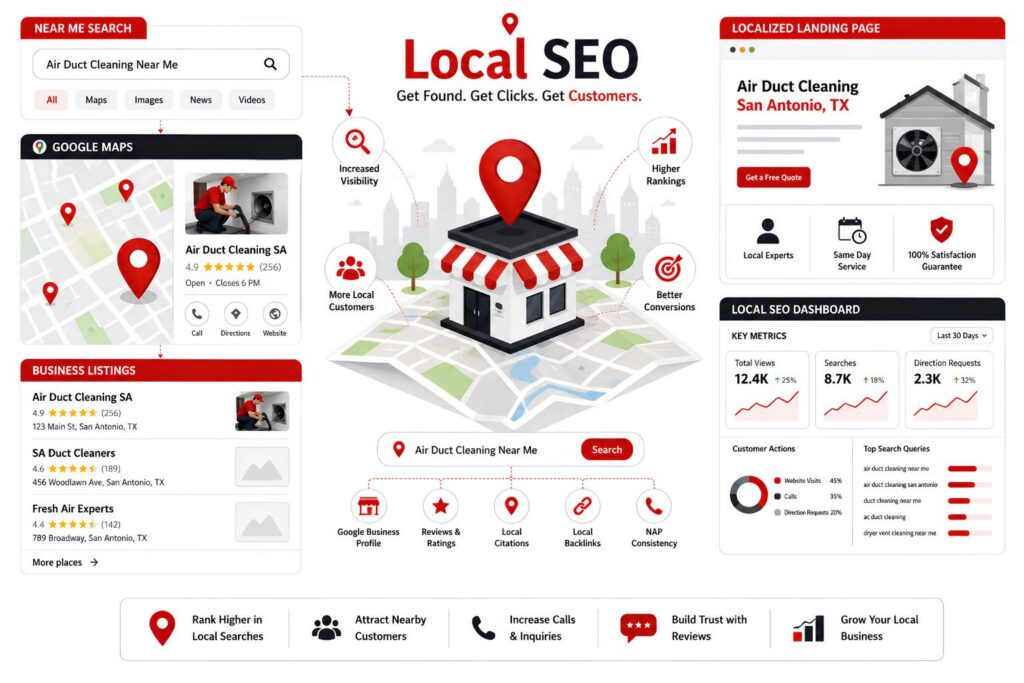
Local SEO remains critical for businesses serving geographic markets.
Common Local SEO Mistakes
- Inconsistent business information
- Weak local landing pages
- Missing local schema
- Poor Google Business Profile optimization
How to Fix It
- Maintain consistent NAP information
- Create localized content
- Optimize Google Business Profile
- Build local relevance
As search algorithms become more intent-driven, businesses are putting greater focus on balancing local visibility with long-term organic authority instead of relying on a single traffic source.
16. Ignoring Crawlability Issues
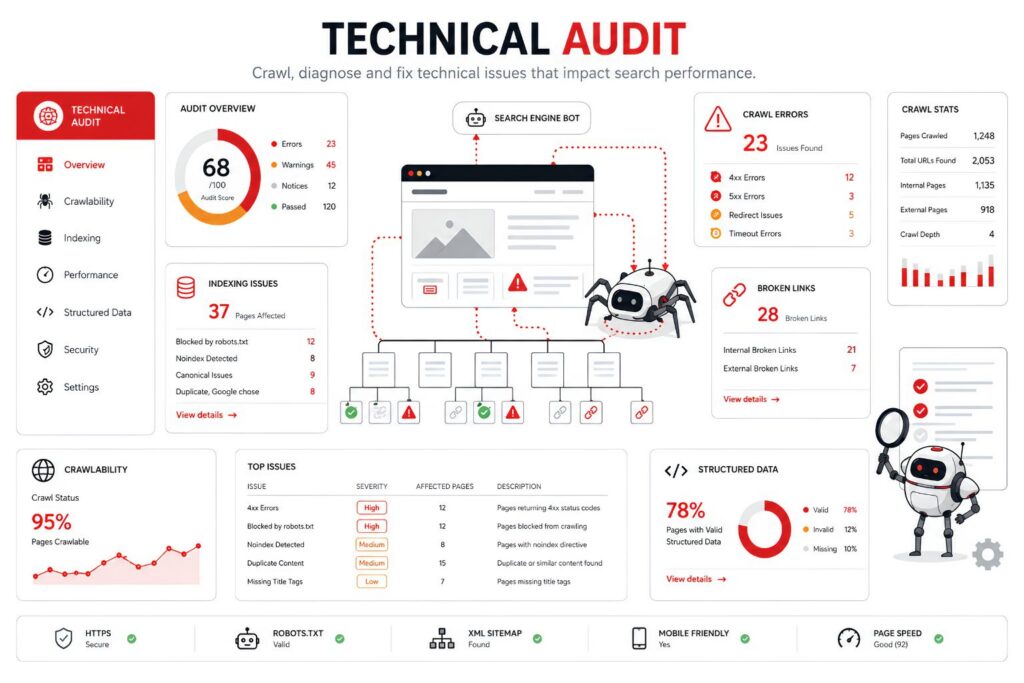
Search engines must access your pages efficiently.
Crawlability issues block visibility.
Common Technical SEO Issues
- Broken links
- Redirect chains
- Blocked resources
- Poor site architecture
- Orphan pages
How to Fix It
Run regular audits.
Many websites struggle with hidden technical issues for months before realizing how much they impact visibility, which is why regular site-wide audit reviews have become essential for long-term growth.
Crawlability issues often begin with small technical misconfigurations, which is why following Google’s official crawling and indexing recommendations remains important for maintaining healthy search visibility.
17. Publishing Generic AI Content
AI-generated content is not automatically bad.
But generic, unedited AI content performs poorly.
Why It Hurts Rankings
Low-quality AI content often lacks:
- Originality
- Expertise
- Accuracy
- Depth
- Unique insight
How to Fix It
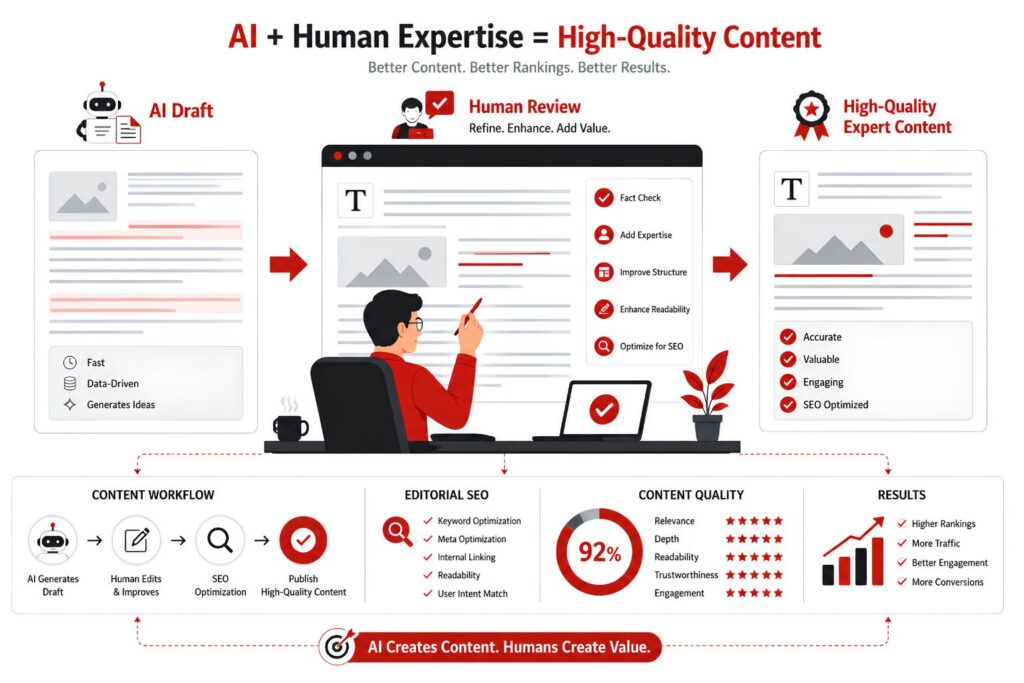
Use AI as an assistant, not a replacement.
Add:
- Expert analysis
- First-hand insights
- Real examples
- Strategic commentary
The rise of AI writing tools has pushed many businesses to reevaluate how automation affects content quality, trust signals, and overall organic performance.
18. Weak E-E-A-T Signals
Experience, Expertise, Authoritativeness, and Trustworthiness remain critical.
Weak E-E-A-T Signals Include
- Anonymous authorship
- No credibility indicators
- Outdated information
- Weak sourcing
How to Improve E-E-A-T
- Add author expertise
- Cite credible sources
- Maintain updated content
- Build reputation signals
Trust strongly influences AI retrieval systems as well.
19. Poor Website Architecture
Messy site structures confuse users and crawlers.
Signs of Poor Architecture
- Deep page depth
- Confusing navigation
- Unclear category structure
- Weak hierarchy
How to Fix It
- Simplify navigation
- Organize content clusters
- Improve internal linking
- Reduce crawl depth
Good architecture also improves user engagement significantly.
20. Ignoring Conversion Optimization
Traffic without conversions has limited value.
Many websites rank but fail to convert visitors effectively.
Common Conversion Problems
- Weak CTAs
- Poor layout
- Slow pages
- Confusing navigation
- Weak trust signals
As competition grows across local search, businesses are placing greater emphasis on the website functionality and UX improvements that directly influence engagement and conversions.
21. Failing to Update Old Content
Outdated content loses visibility over time.
Search systems prioritize freshness for many topics.
How to Refresh Content
- Update statistics
- Improve examples
- Expand sections
- Improve readability
- Add recent insights
Refreshing content also improves AI relevance.
22. Ignoring Analytics and Search Data
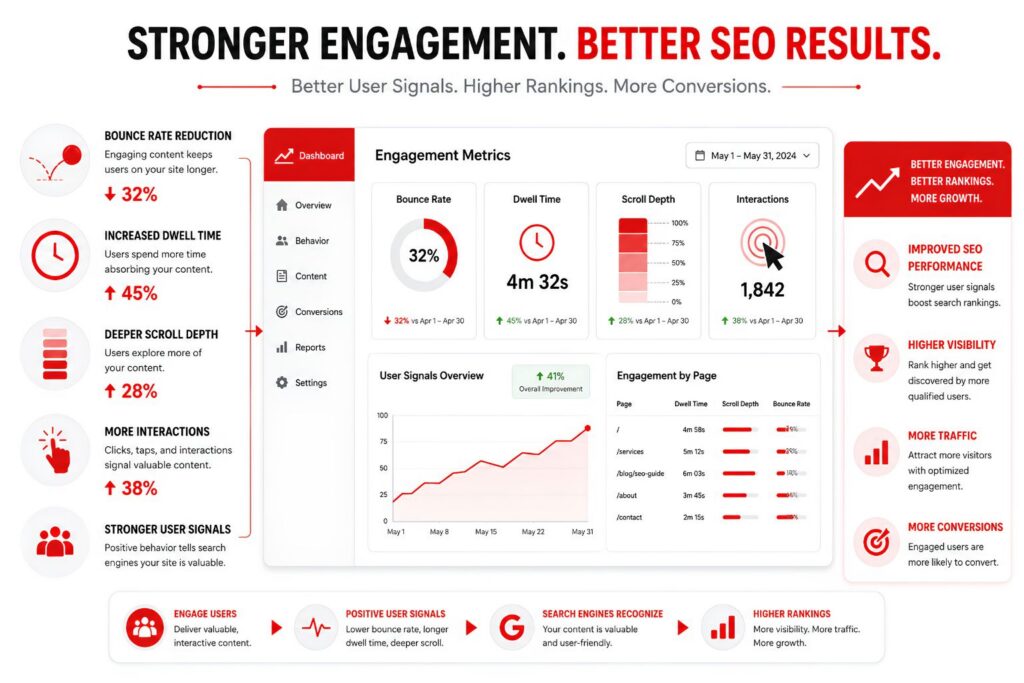
Without data, optimization becomes guesswork.
Important Metrics to Track
- Organic traffic
- Engagement
- Rankings
- Conversion rates
- CTR
- Crawl errors
Recommended Tools
- Google Analytics
- Google Search Console
- Technical auditing tools
23. Weak Content Entities and Context
Modern search engines rely heavily on entities and context relationships.
Common Problems
- Vague terminology
- Weak topical associations
- Missing brand signals
How to Fix It
- Mention related concepts naturally
- Build semantic relevance
- Maintain topic consistency
- Use structured headings
24. Overlooking Accessibility
Accessibility impacts usability and search visibility.
Common Accessibility Issues
- Missing alt text
- Poor contrast
- Weak keyboard navigation
- Non-descriptive buttons
Accessible websites generally perform better across engagement metrics.
25. Treating SEO as a One-Time Task
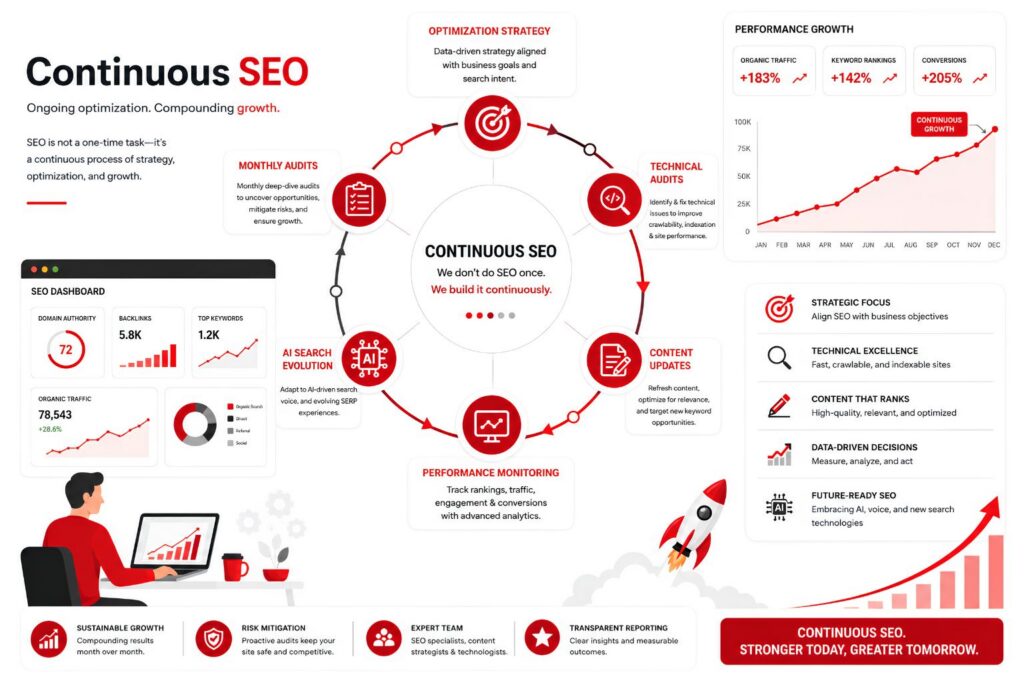
SEO is no longer static.
Search behavior changes constantly.
AI systems evolve rapidly.
Competitors continuously improve.
Long-Term SEO Success Requires
- Ongoing optimization
- Continuous content updates
- Technical maintenance
- User experience improvements
- AI visibility monitoring
Businesses adapting proactively are building stronger long-term digital growth strategies.
Wrapping Up…
SEO in 2026 is far more sophisticated than it was just a few years ago. Search visibility now depends on a combination of technical optimization, content quality, AI retrieval readiness, user experience, semantic relevance, and trust signals.
The websites growing consistently today are not relying on outdated tactics or shortcuts. They are building authoritative content ecosystems, improving website performance, strengthening UX, optimizing for conversational search behavior, and adapting to evolving AI-driven discovery systems.
Businesses investing in long-term website optimization, modern technical SEO practices, and strategic content development are positioning themselves for sustainable organic growth across Google, ChatGPT, Gemini, Perplexity, and future AI search platforms.
For brands looking to strengthen search visibility further, improve AI search readiness, and build a more SEO-optimized website experience, Red Rattler Creative also provides strategic SEO services, website optimization, UX improvements, and digital growth solutions aligned with the future of search.
FAQ: SEO Mistakes in 2026
What are the biggest SEO mistakes in 2026?
Some of the biggest SEO mistakes include ignoring search intent, publishing thin content, poor mobile optimization, weak internal linking, slow website speed, and failing to optimize for AI search visibility.
Why is my SEO not working?
SEO may not work if your website has technical issues, poor content quality, weak topical authority, slow performance, or content that does not match user intent.
How do you fix SEO issues?
Start with a technical audit, improve content quality, strengthen internal linking, optimize user experience, improve mobile performance, and align content with search intent.
What are common technical SEO issues?
Common technical SEO issues include crawl errors, broken links, duplicate content, poor site speed, missing schema markup, and indexing problems.
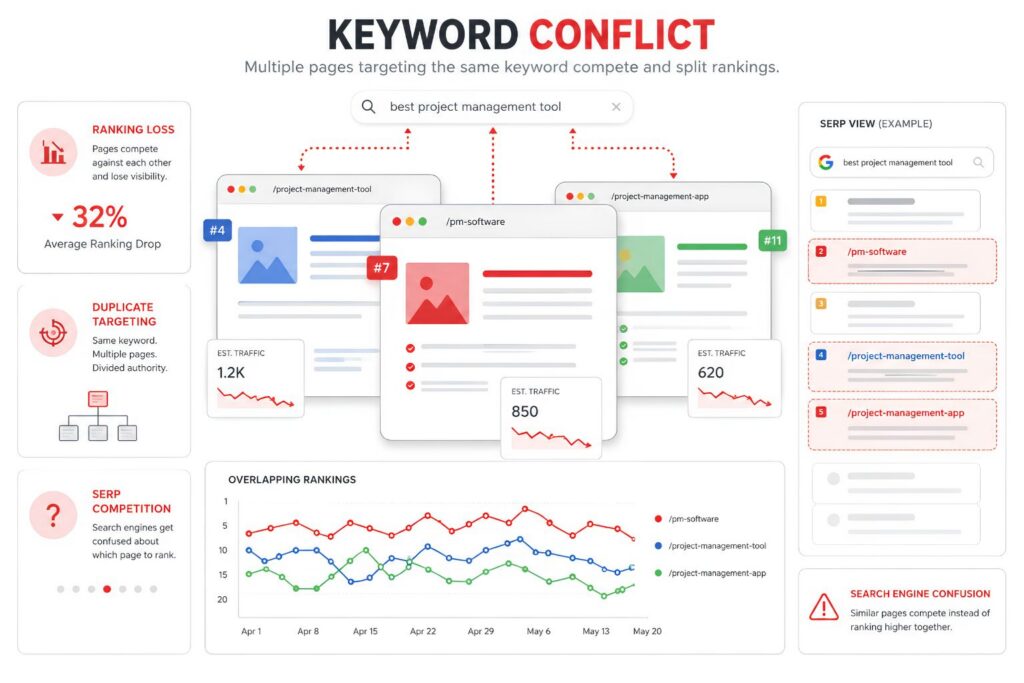
What is keyword cannibalization?
Keyword cannibalization happens when multiple pages target the same keyword or search intent, causing search engines to struggle choosing which page should rank.
Does AI-generated content hurt SEO?
AI-generated content itself is not harmful. Low-quality, generic, or inaccurate content is the real issue. Human editing, expertise, and originality remain essential.
How important is mobile SEO?
Mobile SEO is extremely important because Google primarily uses mobile-first indexing to evaluate rankings and user experience.
How does website speed affect rankings?
Slow websites reduce engagement, increase bounce rates, hurt conversions, and negatively impact both search rankings and AI retrieval visibility.