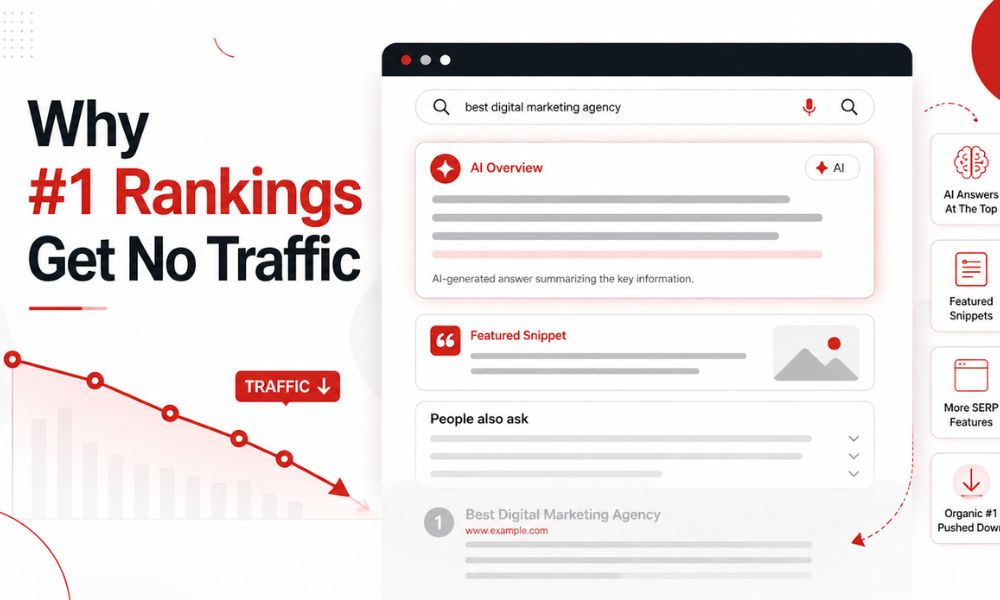

A complete website audit checklist in 2026 is a step-by-step process to evaluate your site’s SEO, technical performance, user experience, content quality, analytics tracking, and AI search visibility. If done correctly, a full SEO audit helps you identify ranking issues, fix technical errors, improve site speed, and increase conversions.
In simple terms, if you are wondering how to audit a website for SEO, this checklist gives you a clear framework with 20 actionable steps covering everything from crawlability and Core Web Vitals to conversion tracking and AI Overviews readiness.
Search engines no longer evaluate websites in isolation. They assess how pages connect, how fast your site loads, how users interact with it, and whether your content demonstrates real topical authority. This website audit checklist is designed to help you uncover issues that directly impact rankings, traffic, and revenue, while aligning your site with modern search behavior in 2026.
Pre-Audit Setup (Before You Start)
Before running a full website audit checklist, set a clear baseline so you can measure improvements accurately.
What to prepare:
- Access to Google Analytics 4 and Google Search Console
- A full list of URLs (export from sitemap or CMS)
- Benchmark data for traffic, rankings, and conversions
- Backup of your current website (especially before redesigns)
Why this matters:
Without a baseline, you cannot measure whether your SEO audit actually improves performance.
Why Website Audits Matter More in 2026

A website audit is no longer just a technical exercise. In 2026, Google and AI-powered search systems will evaluate websites holistically. A strong SEO site audit helps you identify ranking barriers, usability gaps, and content weaknesses before they impact revenue.
Regular audits also support:
- Better crawlability and indexation
- Stronger internal linking structures
- Improved conversion rates
- Greater visibility in AI Overviews and voice search results
For businesses investing in SEO, web design, or Google Ads, audits are the foundation of sustainable growth.
Technical SEO Audit Checklist (Steps 1–7)

1. Crawlability and Indexation Review
Every technical SEO audit checklist starts here. Ensure search engines can crawl and index your most important pages.
Check:
- Google Search Console index status
- Robots.txt directives
- XML sitemap accuracy
- Noindex tags on critical pages
Blocked or misconfigured pages weaken your entire SEO strategy, including local SEO efforts outlined in this guide on local SEO strategies to increase revenue.
2. Site Architecture and URL Structure
A clean site structure improves crawl efficiency and user navigation. URLs should be short, descriptive, and keyword-focused.
Best practices include:
- Logical category structure
- Consistent URL naming
- No unnecessary parameters
- Clear hierarchy between services and blog content
Strong architecture supports internal linking between SEO, web design, and Google Ads content, reinforcing topical authority.
3. Core Web Vitals and Page Speed

Page speed remains a critical ranking factor. A proper website SEO audit evaluates performance across mobile and desktop.
Audit:
- Largest Contentful Paint (LCP)
- Interaction to Next Paint (INP)
- Cumulative Layout Shift (CLS)
Slow sites reduce engagement and hurt conversion rates. Speed improvements often overlap with modern design practices covered in mobile-first website design best practices.
How to Check + Tools + Benchmarks
Benchmarks for 2026:
- LCP: under 2.5 seconds
- INP: under 200 ms
- CLS: under 0.1
How to check:
Use Google PageSpeed Insights and Chrome Lighthouse.
Common issues:
- Large uncompressed images
- Render-blocking scripts
- Missing image dimensions
4. Mobile SEO Audit

Most searches happen on mobile. A mobile SEO audit ensures your site delivers a seamless experience on smaller screens.
Check for:
- Responsive design
- Readable text without zooming
- Tap-friendly buttons
- Mobile page speed issues
Mobile optimization also supports voice search visibility, which is explored further in this voice search optimization guide.
5. HTTPS and Security Signals
Security is a trust and ranking factor. Confirm:
- HTTPS is enforced sitewide
- No mixed content errors
- Forms and checkout pages are secure
Security issues damage trust and can increase bounce rates, especially for service-based businesses.
6. Duplicate Content and Canonicalization
Duplicate content confuses search engines and dilutes ranking signals.
Audit:
- Canonical tags
- Duplicate service pages
- Similar blog content targeting the same keyword
This step is essential when comparing strategies like local SEO vs organic SEO.
7. Structured Data and Schema Markup
Schema helps search engines understand context. Use it to support:
- Services
- Reviews
- FAQs
- Case studies
Structured data improves eligibility for rich results and AI-generated summaries.
URL Redirects and Status Code Audit
Check:
- All old URLs redirect using 301
- No redirect chains (A → B → C)
- No broken internal links
- Correct status codes (200, 301, 404, 5xx)
How to check:
Use Screaming Frog or Google Search Console coverage report.
Common mistakes:
- Using 302 instead of 301
- Leaving old URLs without redirects
- Redirecting everything to the homepage
On-Page SEO Audit Checklist (Steps 8–13)

8. Keyword Targeting and Search Intent
Each page should target one primary keyword and closely related terms. A strong on-page SEO audit evaluates whether content matches informational, navigational, or transactional intent.
Avoid keyword stuffing. Focus on clarity and usefulness.
9. Title Tags and Meta Descriptions
Titles and descriptions influence click-through rate. Audit for:
- Keyword inclusion
- Clear value proposition
- Length limits
- Duplicate metadata
Improving CTR aligns with paid strategies discussed in how to improve Google Ads CTR.
10. Header Structure and Content Hierarchy
Use H1, H2, and H3 tags correctly. Headers help users scan content and help search engines understand importance.
This structure is especially important for long-form guides like this SEO audit checklist.
11. Image Optimization
Images should enhance content, not slow it down.
Audit:
- File sizes
- Alt text relevance
- Lazy loading
- Proper formats
Visual clarity also supports conversion-focused design elements covered in top website features to boost local business conversions.
12. Internal Linking Audit

Internal links connect content silos and distribute authority. Review:
- Orphan pages
- Over-optimized anchor text
- Missing links to core services
Strategic linking strengthens SEO services pages like SEO services and website development.
13. Content Quality and Information Gain
Content should offer unique value, not just reword existing articles. AI systems reward depth, clarity, and originality.
This matters even more when addressing concerns around AI-generated content and SEO.
Metadata and Social Preview Audit
Search visibility is not just about rankings. It also includes how your content appears when shared.
Check:
- Open Graph tags (Facebook, LinkedIn)
- Twitter Card tags
- Featured image size (recommended 1200×630)
- Favicon and branding consistency
How to test:
Use social sharing debuggers like Facebook Sharing Debugger.
Why it matters:
Better previews increase click-through rates from social and messaging platforms.
UX and Conversion Audit Checklist (Steps 14–17)

14. User Experience and Navigation
A UX audit evaluates how easily users find information.
Key areas:
- Menu clarity
- Logical page flow
- Consistent design patterns
Understanding the difference between usability and aesthetics is explained well in UI vs UX design.
15. Conversion Path Analysis
Every page should guide users toward an action.
Audit:
- Calls to action
- Form placement
- Contact accessibility
Conversion-focused improvements directly affect ROI, especially when paired with paid campaigns like Google Ads.
16. Trust Signals and Proof
Trust elements improve engagement and conversions.
Include:
- Reviews
- Testimonials
- Certifications
- Case studies
Real-world examples, such as those in Red Rattler Creative case studies, reinforce credibility.
17. Accessibility Compliance
Accessibility improves usability and reduces legal risk.
Check:
- Color contrast
- Keyboard navigation
- Alt text
- ARIA labels
Accessible sites often perform better in search and user engagement metrics.
Accessibility benchmarks:
- Text contrast ratio of at least 4.5:1
- All images include descriptive alt text
- Keyboard navigation works properly
Advanced checks:
- Visible focus states
- Form labels and error handling
- Screen reader compatibility
Tools:
- Lighthouse
- axe DevTools
Analytics and Tracking Audit Checklist
A complete website audit checklist must validate whether your data is accurate.
Check:
- Google Analytics 4 installed on all pages
- Google Tag Manager working correctly
- Conversion events (form submits, calls, purchases) are tracked
- Google Ads and Search Console linked
- Internal traffic is filtered
How to validate:
- Use GA4 DebugView
- Use GTM Preview mode
Common issues:
- Missing conversion tracking
- Duplicate tracking codes
- Events not firing correctly
Privacy and compliance:
- Cookie banner is active
- Consent Mode v2 configured
- Tracking respects user consent
AI, GEO, and Future-Focused Audit Checklist (Steps 18–20)
18. AI Overviews and Generative Search Readiness
AI Overviews prioritize websites that demonstrate topical expertise through structured content silos. Clear internal linking between blogs and parent services helps AI understand domain authority and context.
Audit whether:
- Content answers questions early
- Topics are deeply covered
- Related pages are linked logically
This approach aligns with modern Generative Engine Optimization (GEO).
19. Content Silos and Topical Authority
Group related content under clear themes like SEO, web design, and Google Ads.
For example:
- SEO blogs link to SEO services
- Design content supports website development pages
- Ads content reinforces paid media expertise
This structure improves rankings and AI visibility.
20. Ongoing Monitoring and Iteration
A site audit checklist is not a one-time task. Revisit audits quarterly to adapt to algorithm updates, user behavior changes, and new technologies.
Continuous improvement is what separates average sites from high-performing ones.
Website Launch and Migration SEO Checklist
A full SEO audit is critical before and after launching or redesigning a website.
Before launch:
- Backup current website
- Map all URLs with 301 redirects
- Block staging site using noindex
On launch day:
- Remove noindex tags
- Submit sitemap in Google Search Console
- Verify analytics tracking
After launch (first 30 days):
- Monitor 404 errors
- Track rankings and traffic changes
- Validate redirects
Post-Launch Monitoring Checklist
A website audit checklist does not end after implementation.
Day 1:
- Confirm tracking is working
- Check indexation
Week 1:
- Monitor crawl errors
- Review traffic trends
Month 1:
- Compare performance with baseline
- Analyze conversion rates
Best SEO Audit Tools for 2026
Use the right tools to validate each part of your website audit checklist.
Technical SEO:
- Google Search Console (indexing and coverage)
- Screaming Frog (site crawl analysis)
Performance:
- Google PageSpeed Insights
- Lighthouse
Backlinks and SEO analysis:
- Ahrefs
- Semrush
Structured data:
- Google Rich Results Test
Accessibility:
- Lighthouse
- axe DevTools
External Resources Worth Referencing

To deepen your audit process, reputable external tools and guides include:
- Google Search Console documentation
- Google PageSpeed Insights
- Ahrefs and Semrush audit guides
- Google’s Search Quality Rater Guidelines
These resources complement internal audits without replacing strategic thinking.
Wrapping Up…
A complete website audit checklist in 2026 goes beyond fixing errors. It evaluates how well your website supports visibility, usability, trust, and conversions in an AI-driven search landscape. By following this 20-step SEO audit checklist, businesses can build stronger rankings and more resilient digital growth.
If you want professional support in implementing these insights, explore Red Rattler Creative’s SEO services or website development solutions.