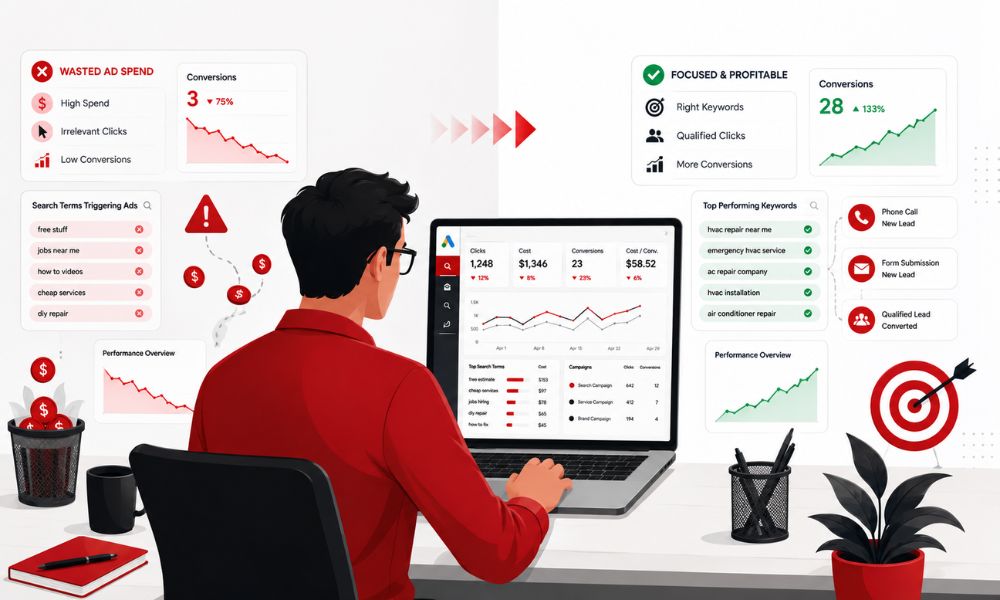
Google Ads can put a small business in front of potential customers at the exact moment they are searching for a product or service. Yet many businesses spend money on ads without seeing enough calls, form submissions, or sales.
So, why do Google Ads fail for small businesses?
In most cases, the problem is not Google Ads itself. The campaign may be targeting the wrong searches, sending visitors to a weak landing page, tracking the wrong conversions, or spreading a limited budget across too many keywords and campaigns.
The good news is that these problems can usually be identified and fixed.
1. The Campaign Targets the Wrong Keywords
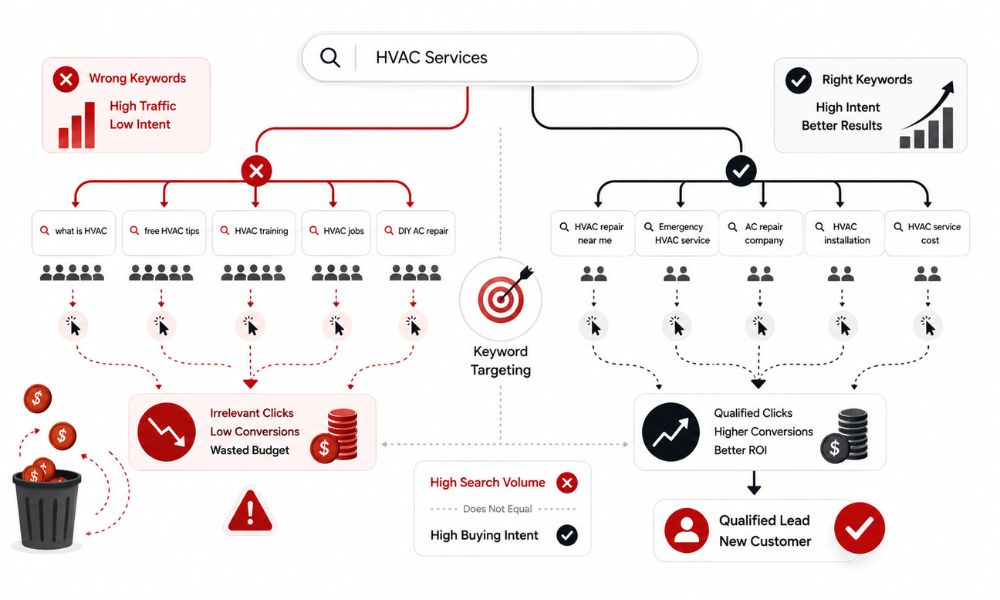
A high search volume does not necessarily mean high-quality traffic.
Someone searching for “SEO” could be looking for a definition, while someone searching for “SEO services San Antonio” is much more likely to be looking for a provider.
This difference in intent matters even more when you are running Google Ads for small business. A large company may have enough budget to test a broad range of searches. A small business usually needs to make every click count.
Start with keywords that closely match what you sell and what customers search when they are ready to take action. Review the actual search terms that trigger your ads and remove searches that have little chance of becoming customers.
2. There Is No Proper Conversion Tracking
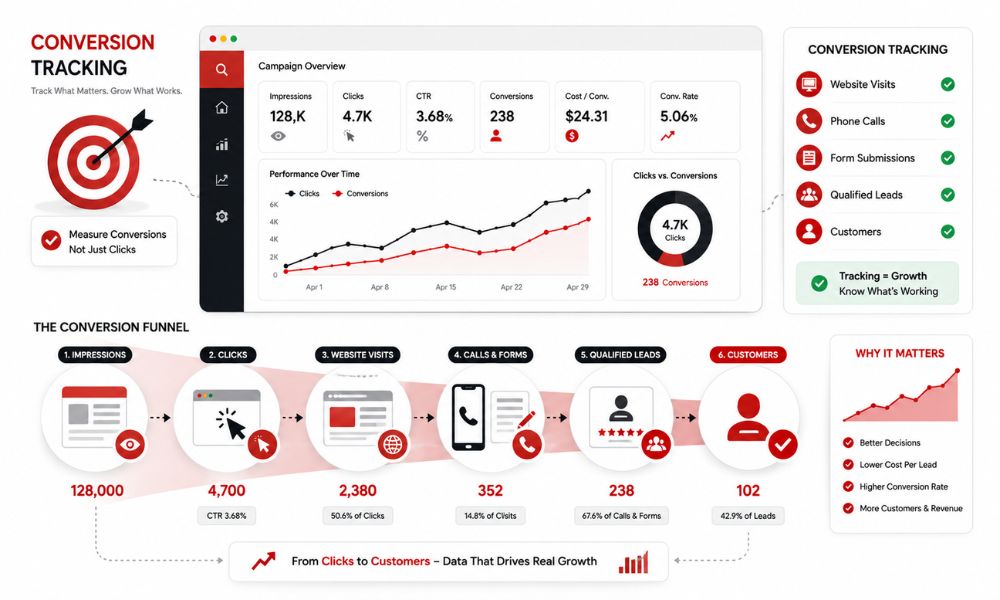
Getting clicks is not the same as getting customers.
If a campaign generates 100 clicks, you still need to know how many people called, submitted a form, booked an appointment, requested a quote, or completed a purchase.
Without reliable conversion tracking, it becomes difficult to tell which keywords and ads are producing Google leads and which are simply consuming your budget.
Before increasing ad spend, make sure the actions that matter to your business are being tracked correctly. Google Ads supports conversion tracking for different types of customer actions, including website actions and phone calls. Google Ads conversion tracking documentation
3. The Landing Page Does Not Match the Ad
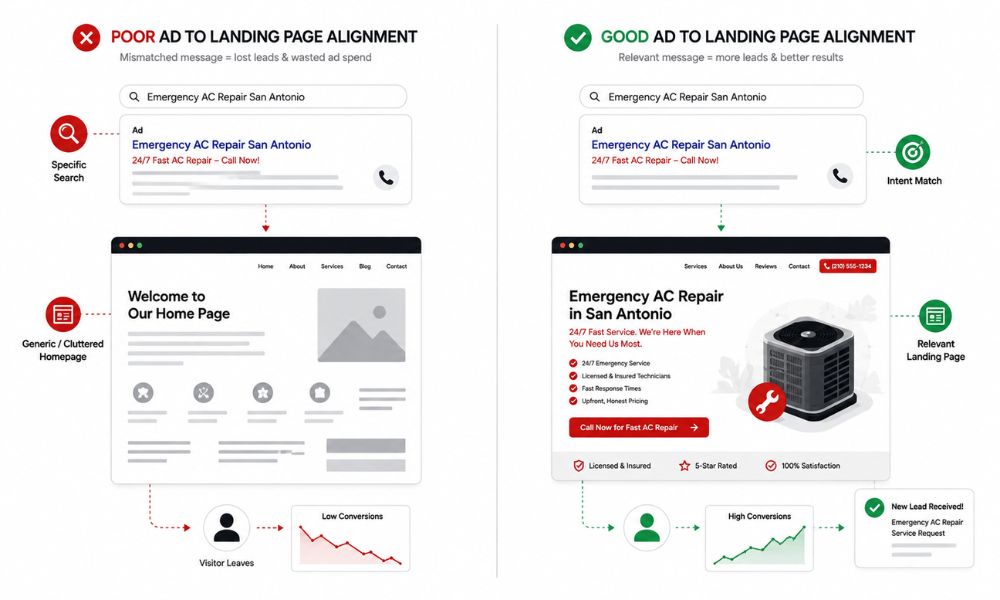
Imagine someone searches for “emergency AC repair San Antonio,” clicks your ad, and lands on a general homepage with no clear mention of emergency repairs.
The visitor now has to search for the information they expected to find immediately.
That extra friction can cost you the lead.
A strong landing page should continue the same message that appeared in the ad. The service should be obvious, the benefits should be easy to understand, trust signals should be visible, and the next step should be simple.
For local businesses, creating pages around specific services and locations can also improve the connection between search intent and the page experience. How to Create Local Landing Pages for SEO
4. The Budget Is Spread Too Thin
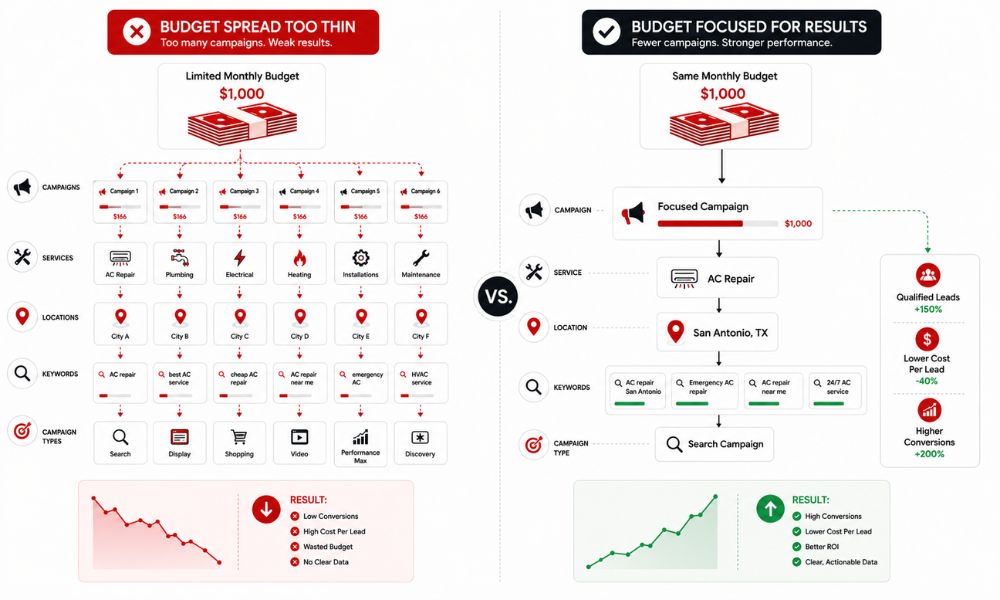
One of the biggest challenges with Google Ads for small business campaigns is limited budget.
A business might try to advertise every service, target several cities, and run multiple campaign types at the same time. The result is often too little budget behind each campaign to generate useful data.
A better approach is to prioritize.
Start with the services that have the strongest demand and commercial intent. Focus your geographic targeting on areas you actually serve. Once you know which campaigns are generating qualified leads, you can expand from there.
This is particularly important for local businesses competing in expensive markets.
5. The Campaign Relies on Irrelevant Traffic
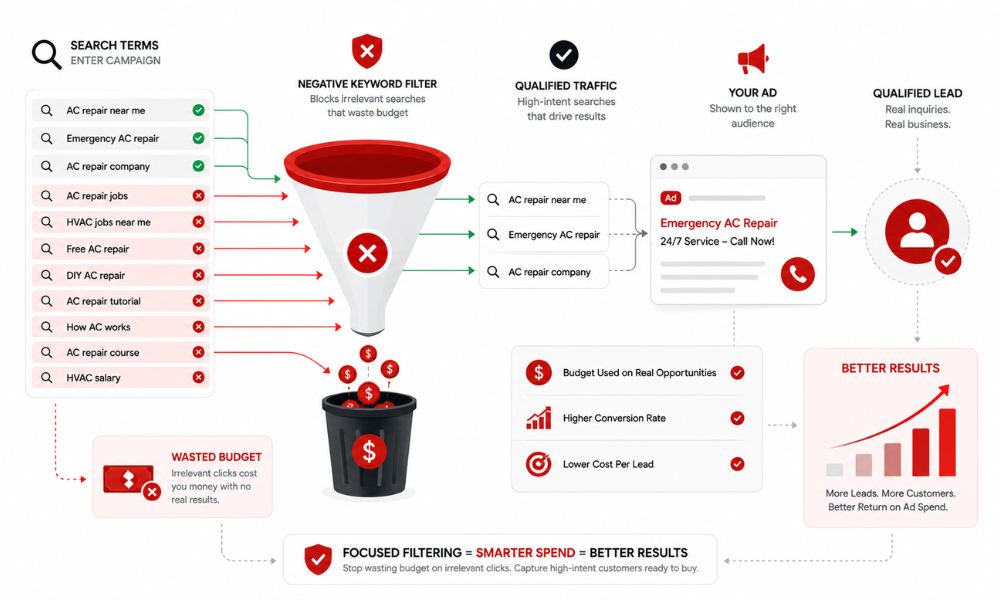
Not every click has the same value.
A campaign can receive plenty of traffic from searches that are related to your keywords but have nothing to do with your actual customer.
For example, a company selling professional services may not want clicks from people searching for free resources, jobs, training, definitions, or DIY solutions.
This is where negative keywords become important. Reviewing the Search Terms Report regularly can reveal irrelevant searches and help prevent your ads from appearing for them in the future. Google Ads Search Terms Report
6. The Ads Are Not Competitive Enough
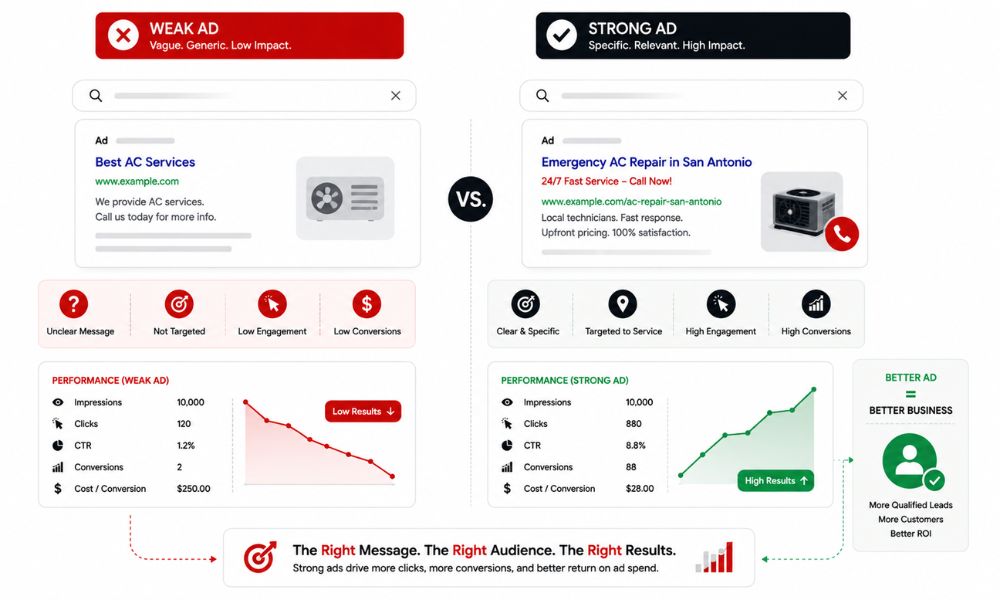
Getting your ads in front of searchers is only part of the challenge. You also need to give them a reason to click.
Weak headlines, generic offers, and unclear calls to action can result in a low click-through rate even when the campaign is targeting relevant keywords.
Small improvements to ad messaging can make a difference. Test different benefits, offers, calls to action, and service-specific messaging instead of running nearly identical ads.
If click-through rate is one of your campaign problems, improving the relationship between the search query, ad message, and offer should be a priority.
7. The Campaign Is Never Optimized After Launch
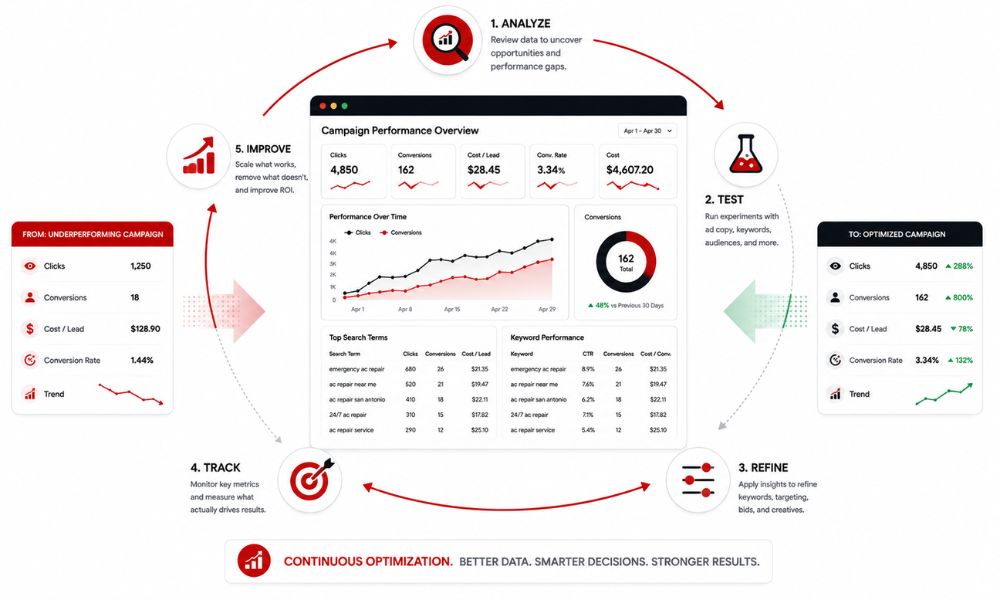
Launching a Google Ads campaign is not the finish line.
Performance data starts becoming useful after the campaign is running. You can see which searches generate conversions, which ads attract engagement, which locations perform well, and where your budget is being wasted.
That information should guide ongoing decisions.
Optimization may involve:
- Removing irrelevant search terms
- Adding negative keywords
- Adjusting budgets
- Testing ad copy
- Improving landing pages
- Refining geographic targeting
- Reviewing conversion data
- Reallocating spend toward better-performing campaigns
This ongoing process is what separates an actively managed campaign from a set-it-and-forget-it campaign.
How Much Do Google Ads Cost for Small Businesses?
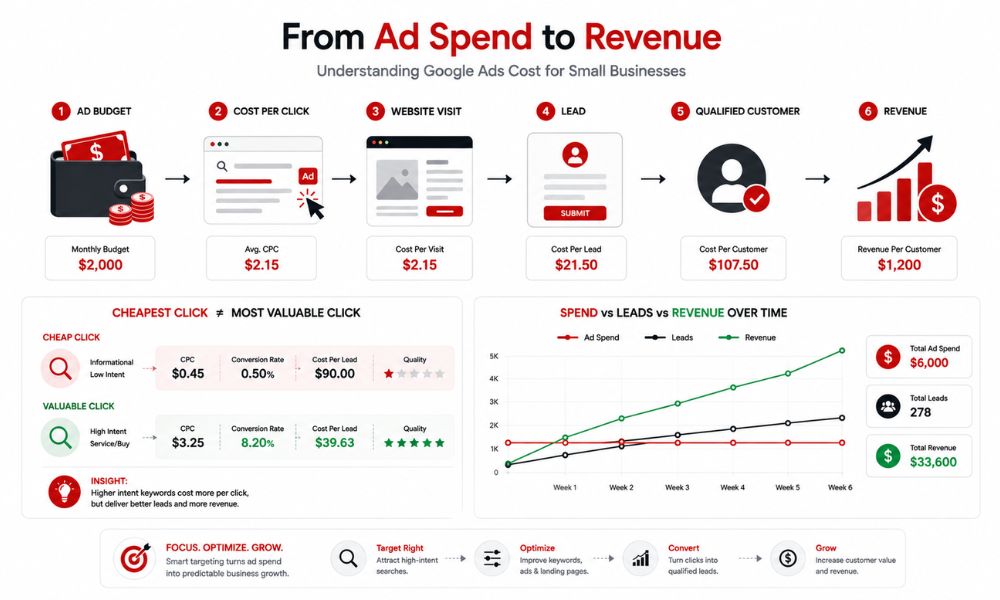
There is no standard price for Google Ads.
The cost of Google Ads depends on factors such as keyword competition, industry, location, bidding strategy, and the value of the customers you are trying to acquire.
A $2 click is not automatically better than a $10 click. If the $10 click produces a qualified customer while the $2 clicks produce nothing, the cheaper traffic is not necessarily the better investment.
Instead of focusing only on cost per click, small businesses should look at the full path from click to customer:
Ad click → Landing page → Lead → Qualified lead → Customer
That gives you a much clearer picture of whether your advertising is actually profitable.
What About Google Local Advertising?
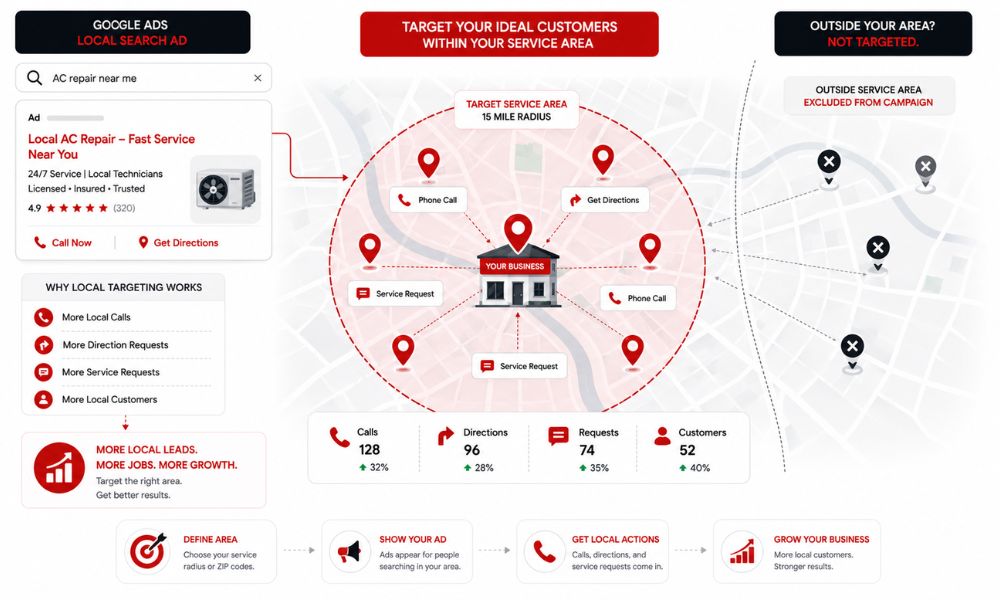
For service-area and local businesses, geographic targeting deserves particular attention.
If you only serve San Antonio and nearby areas, there is little value in spending money on searches from people outside your service area. Location settings, service areas, local landing pages, and location-specific ad messaging should all work together.
Paid advertising can also complement organic visibility. A business that invests in both paid search and local SEO can reach customers at different stages of the buying journey. Understanding the difference between local SEO and organic SEO can help clarify where each strategy fits.
How to Fix an Underperforming Google Ads Campaign
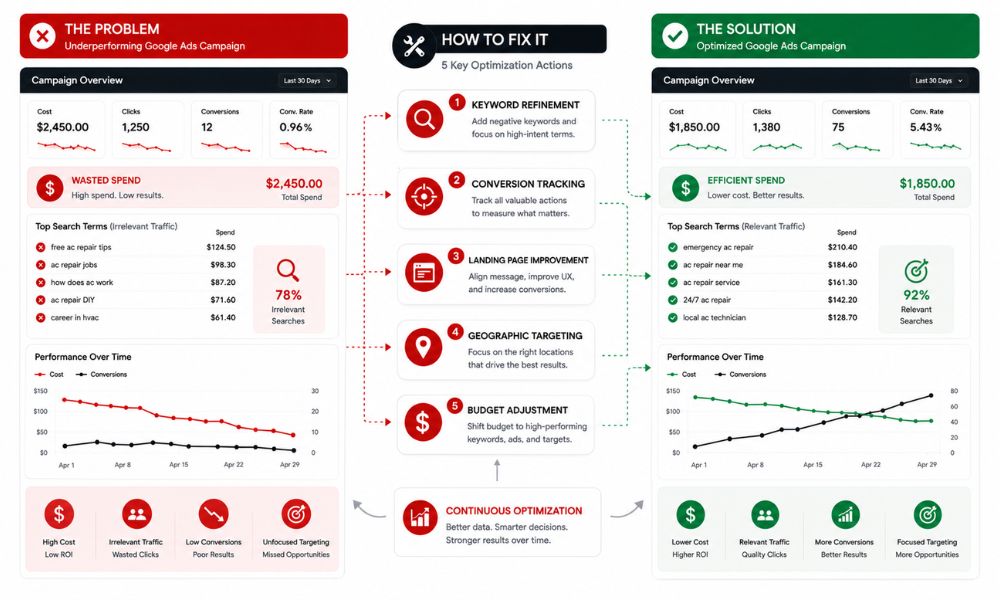
If your ads are spending money without producing enough business, start with the basics.
Check the search terms. Are people searching for what you actually sell?
Check conversion tracking. Are calls and form submissions being recorded correctly?
Check the landing page. Does it immediately match the promise made in the ad?
Check the budget. Is your available spend concentrated on your best opportunities?
Check the geographic targeting. Are you paying for clicks from people you cannot serve?
Check performance regularly. Are you using actual conversion data to make campaign decisions?
Fixing these areas can often make a bigger difference than simply increasing the budget.
When Google Ads Start Working for Your Business
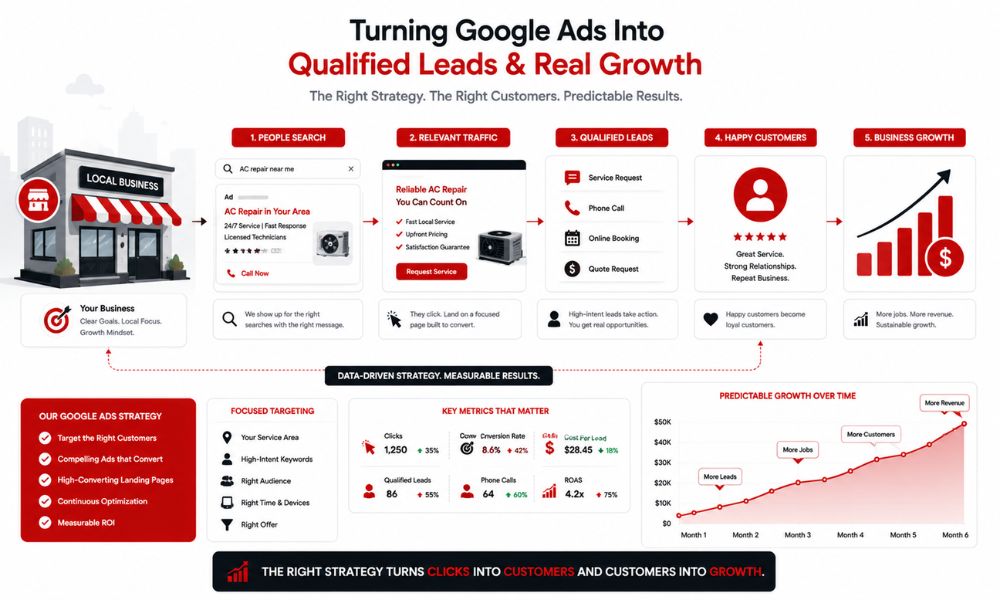
Google Ads can be a valuable growth channel for small businesses, but success rarely comes from simply increasing the budget. The strongest campaigns are built around the right search intent, focused targeting, accurate conversion tracking, relevant landing pages, and ongoing optimization.
If your campaigns are getting clicks without generating enough customers, the solution may be a better strategy rather than a bigger spend. By identifying where your budget is being wasted and focusing on the searches, messages, and pages that drive real conversions, you can turn paid search into a more predictable source of leads.
At Red Rattler Creative, we help businesses build and manage Google Ads campaigns with a focus on qualified traffic, measurable conversions, and sustainable growth. When every part of the campaign works together, Google Ads becomes more than a source of clicks. It becomes a channel that supports real business growth.
Frequently Asked Questions About Google Ads for Small Businesses
Is Google Ads worth it for small businesses?
Yes, Google Ads can be worth it for small businesses when campaigns target relevant, high-intent searches and track meaningful conversions. The key is making sure the cost of acquiring a customer makes sense for the business.
How can I fix my Google Ads?
Start by reviewing your search terms, keyword targeting, conversion tracking, landing pages, geographic targeting, and budget allocation. Remove irrelevant searches, improve ad-to-landing-page relevance, and use conversion data to determine where your budget is producing the best results.
Are Google Ads worth it in 2026?
Google Ads can still be an effective advertising channel in 2026, particularly for businesses that want to reach people actively searching for their products or services. However, competition and customer behavior continue to change, so campaigns need regular testing and optimization rather than a set-and-forget approach.
How much should a small business spend on Google Ads per day?
There is no universal daily budget. A business should consider its average cost per click, conversion rate, customer value, competition, and service area before setting a budget. Starting with a focused campaign can be more effective than spreading a small budget across too many keywords and locations.
Is $10 a day enough for Google Ads?
A $10 daily budget can be enough to test a narrowly targeted campaign in some markets, but it may generate limited data in competitive industries. Whether it is enough depends on the average cost per click and how many qualified searches are available in the target area.
Is $20 a day good for Google Ads?
A $20 daily budget can work for a focused local campaign, particularly when targeting a small service area and a limited number of high-intent searches. The important factor is not the daily amount alone, but whether the campaign generates leads at a sustainable cost.
What are the disadvantages of Google Ads?
The main disadvantages include ongoing advertising costs, strong competition for valuable keywords, wasted spend from irrelevant searches, and the need for continuous management. Poor targeting or weak landing pages can also make a campaign expensive without producing enough leads.
Who is Google Ads’ biggest competitor?
Google Ads competes with several digital advertising channels, including Microsoft Advertising, Meta Ads, Amazon Ads, and other paid media platforms. The best alternative depends on where a business’s customers spend time and whether the goal is search demand, social discovery, product sales, or brand awareness.