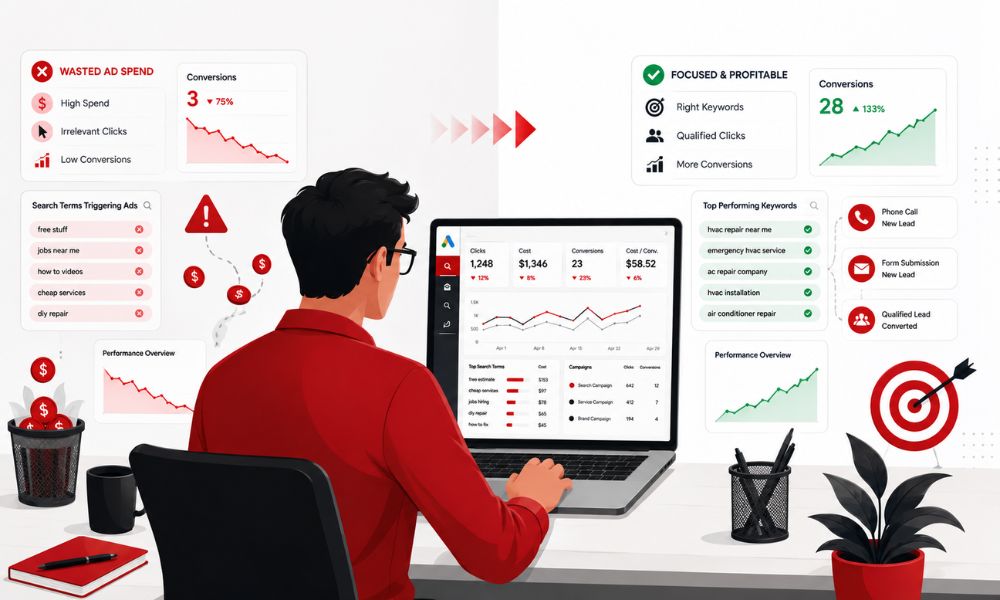

Want to know why your Google Display Ads aren’t working? You’re probably ignoring what your competitors are doing.
It’s like trying to win a race with your eyes closed while they’re studying the track.
Businesses that actually pay attention to competitor ads get way better results and waste less money.
Ready to stop guessing? Here’s how to sneak a peek at their strategies and finally get ahead.
Why Competitor Research in Google Display Ads is Important

Here’s the thing—running Google Display Ads without checking what your competitors are up to is just asking for trouble. You’re basically flying blind while they’re using a roadmap.
Your competitors have already blown through their budgets, figuring out what works.
They’ve tested different audiences, tried various ad formats, and discovered which websites actually convert. That’s free market research sitting right there for you to learn from.
When you dig into Google Display Ads competitor research, you get the inside scoop on their ad placement strategy.
You’ll see where they’re spending money, what messages they’re using, and where they’re not advertising at all. Those gaps are your chance to grab their customers.
Related: See how we helped businesses capture untapped opportunities in our marketing case studies
Without this intel, you’re just guessing with your budget. With competitor insights, you can craft Google Ads that actually compete instead of getting lost in the noise.
Exploring the Google Ads Transparency Center & Google Ad Library

Google basically handed us a cheat sheet for competitor research with their Ads Transparency Center and Google Ad Library. Most people have no clue these tools even exist.
Here’s what you can dig up in the Google Ads Transparency Center:
• See exactly what ads your competitors are running right now.
• Find out when they launched each campaign.
• Check which countries or regions they’re targeting.
• Spot the different creative versions they’re testing.
The Google Ad Library is where things get really interesting. You can go back in time and see what campaigns they’ve run before, what they scrapped, and what seems to be working long-term.
Why this stuff actually matters:
• You’ll catch onto design trends before everyone else.
• Notice when competitors expand into new markets.
• Figure out their seasonal patterns and timing.
If you’re new to Google Ads, check out our guide on improving Google Ad Rank for tips on building campaigns that actually perform.
Using Auction Insights for Identifying Competitor Overlap
Google Ads’ Auction Insights feature shows you exactly who you’re competing against for the same keywords. Instead of guessing at your competition, this tool gives you real data about who’s actually bidding on your terms and taking your potential clicks.
Here’s what Auction Insights reveals:
• Each competitor’s impression share percentage.
• How often they rank above your ads.
• Which specific keywords they’re dominating.
• Overlap rate showing how often you compete directly.
You might discover competitors you never knew were targeting your audience, or find out that the big company you were worried about isn’t even going after your main keywords. Sometimes the real competition comes from smaller players you hadn’t considered.
Want to learn how CTR plays into this? Read our blog on how to improve Google Ads CTR.
Accessing this data is straightforward:
• Go to any campaign or ad group in Google Ads.
• Click the “Auction Insights” tab.
• Review the competitive breakdown for that specific targeting.
The tool updates regularly, so you can track how the competitive landscape changes over time. No third-party tools needed—just straight data about who’s really fighting for your audience’s attention.
Leveraging Third-Party Tools for Competitor Ad Spying (SEMRush, SimilarWeb, Moat, Adbeat)

These tools can really help you see what your competitors are up to. SEMRush shows you the ads they’re running and how much they’re probably spending.
SimilarWeb tells you where their website traffic comes from, and Moat lets you see their actual ads and where they’re placing them.
Here’s a smart move: check Google Ads’ Auction Insights first. It’s free and shows you exactly who you’re competing against in the same auctions. Once you know your main rivals, then you can dig deeper with these other tools.
Adbeat focuses specifically on display ads, but don’t overcomplicate things. Pick one tool and really learn how to use it well.
Look for patterns in what your competitors do—what kind of ads they create, who they target, and when they ramp up their spending. That’s where you’ll find the good data.
Curious how SEO works hand-in-hand with ads? Check out our SEO services to see how we blend organic and paid strategies for maximum ROI.
Analyzing Competitor Creatives (Formats, Messaging, CTAs, Design)
Looking at your competitors’ Google Display Ads creatives is like getting a sneak peek at their playbook. Start with the basics—check out what formats they’re using.
Some stick with simple banner ads, while others go all-out with videos or interactive rich media. Their ad placement strategy also tells you where they think their customers hang out online.
Then dig into their messaging. Notice how they talk about problems their customers face and what makes their product the solution.
Don’t just steal their ideas—figure out why their approach works. Their call-to-action buttons reveal a lot, too. While some play it safe with “Buy Now,” others get creative with something like “Claim Your Spot.”
The visual stuff matters big time. Those colors, fonts, and images aren’t random choices—they’re designed to grab attention and create feelings.
Spot the patterns in how they present their brand across different Google Display Ads creatives. All this research helps you build ads that actually connect with people instead of just blending into the background.
Design plays a huge role here. Learn more about effective visuals in our blog on UI vs. UX design differences
Reviewing Competitor Ad Placements Across Sites and Apps

Ever wonder why your competitors’ ads seem to pop up everywhere while yours feel invisible? It’s all about their ad placement strategy.
They’re not just throwing ads out there and hoping for the best—they’re being strategic about where their Google Display Ads placements show up.
Start by browsing websites your target audience visits. Notice which competitors consistently appear on news sites, blogs, or apps your customers use. Are they dominating YouTube? Showing up in mobile games? Take screenshots and notes.
Tools like SEMrush and SpyFu can reveal where competitors place their ads, but sometimes good old-fashioned detective work tells you more. Check industry forums, popular blogs in your niche, and even competitors’ own websites—many retarget visitors with display ads.
The goal isn’t copying exactly what they do, but understanding their placement logic so you can do it better.
Placement works best when paired with good targeting. Explore our article on local SEO strategies to increase revenue to see how local visibility complements ad reach.
Wrapping Up…
Want to know what your competitors are doing with their Google Display Ads? Good—because that intel can make or break your own campaigns.
The tricky part isn’t gathering the data, though. It’s actually knowing what to do with it.
That’s where we come in. At Red Rattler Creative, we take those competitor insights and help you build campaigns that actually move the needle.